Powder Technical Center, PTC ASEAN
PRECI

Home / Processes / Spray drying

Spray drying service

Spray drying trials and contract production

From liquid to powder in one step
On PRECI spray dryers in Chonburi

Typical requests

When customers come to us

Spray drying trials and contract processing for customers who face situations like these.

Occasional production

A dryer is costly and takes space. You need powder only from time to time.

New materials

You need prototype powder of a new material.

Before you invest

You need sample powder before buying equipment.

Small volumes

Volumes are too small to justify your own line.

No in‑house know‑how

You lack the staff or experience to run spray drying.

Stable quality

You need consistent, repeatable powder quality.

Dust and environment

Dust and exhaust control are a concern in your plant.

Feasibility

You want to know whether your material can be spray dried at all.

Capabilities

What we handle

Sample size

From small laboratory samples to production lots.

Materials

All industries. Any material that can be handled safely and is compatible with stainless steel wetted parts.

Particle size

From a few µm to over 100 µm, depending on the feed and the dryer.

Solvents

Water‑based feeds at PTC ASEAN. Organic solvents and closed‑cycle nitrogen systems can be arranged in Japan.

Equipment

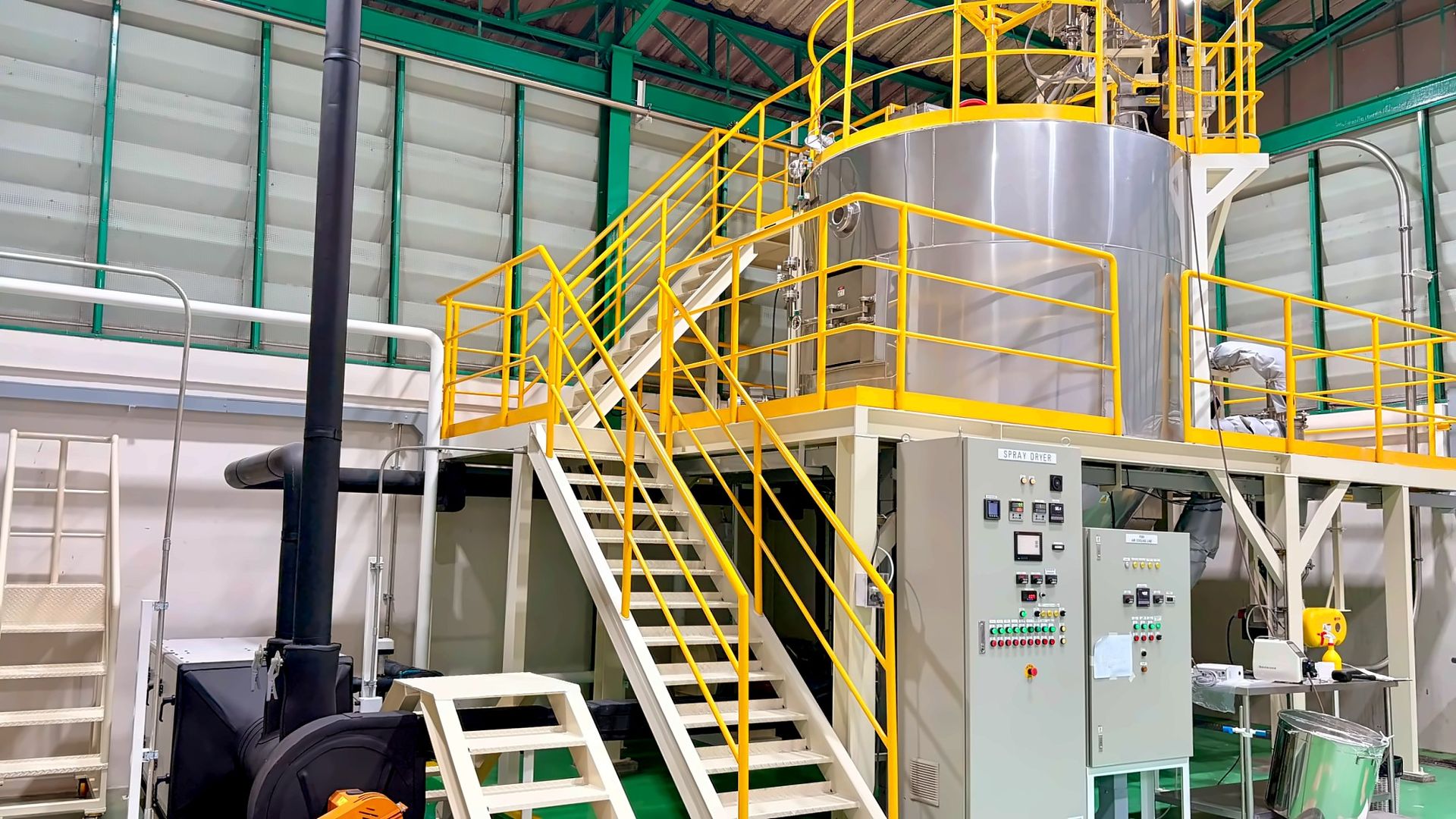
Spray dryers at PTC ASEAN

Small dryers for trials, the P260 for larger trials and contract production.

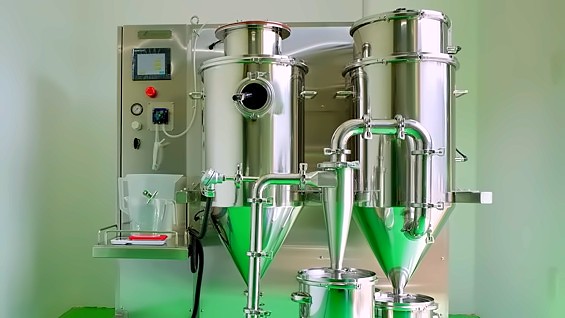
SB39 spray dryer

Laboratory scale

SB39

Two‑fluid nozzles. Fine particles from small samples.

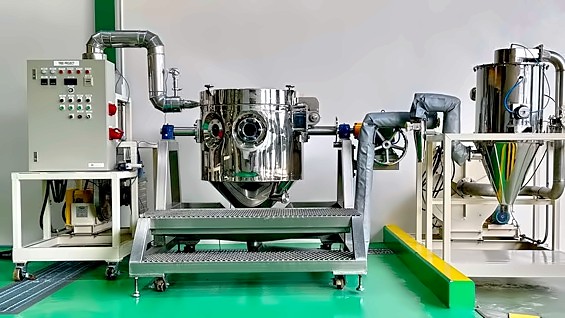
TR80 spray dryer

R&D scale

TR80

Rotary atomizers and two‑fluid nozzles.

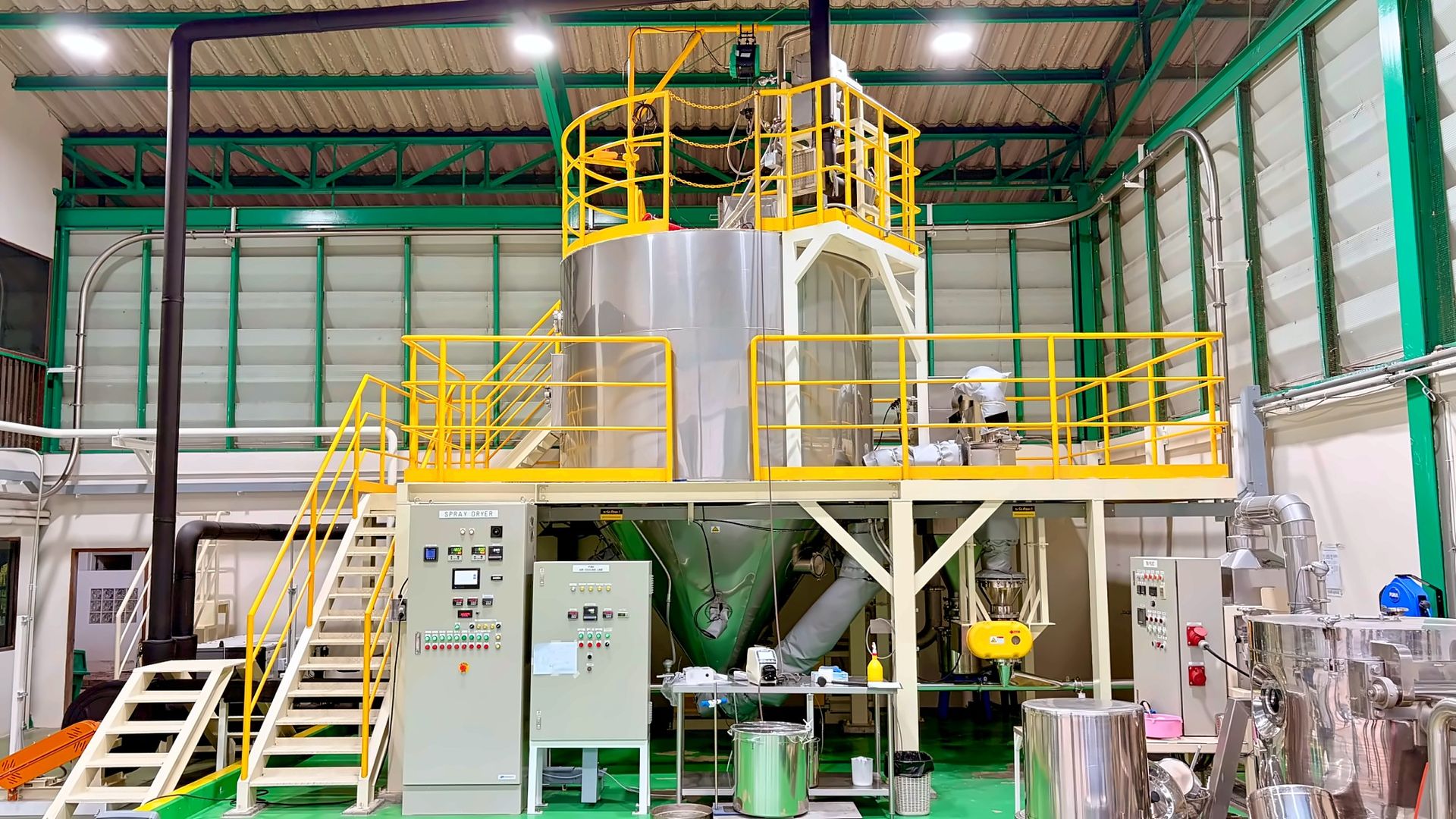
P260 dual-function

Pilot to production

P260 dual‑function

Rotary atomizer, two‑fluid and pressure nozzles. Dehumidified process gas and a pneumatic conveying line with cooling.

Why the P260 is different from a standard spray dryer

Unique in Thailand. A standard spray dryer struggles with difficult products in a tropical climate; the P260 controls its process gas and cools the powder.

Standard spray dryerP260 at PTC ASEAN
Process gasAmbient air; results change with humidity and seasonDehumidified and cooled; the same conditions all year
Heat‑sensitive productsHigh outlet temperatureLower outlet temperature protects the product
Sticky, hygroscopic, high‑fat and high‑sugar productsBuild up in the chamber and cakeDried consistently, free‑flowing
Powder after dryingWarm and prone to cakingCooled in dry air: stable moisture and bulk density, ready to pack
FunctionSpray drying onlySpray dryer or spray cooler in one unit
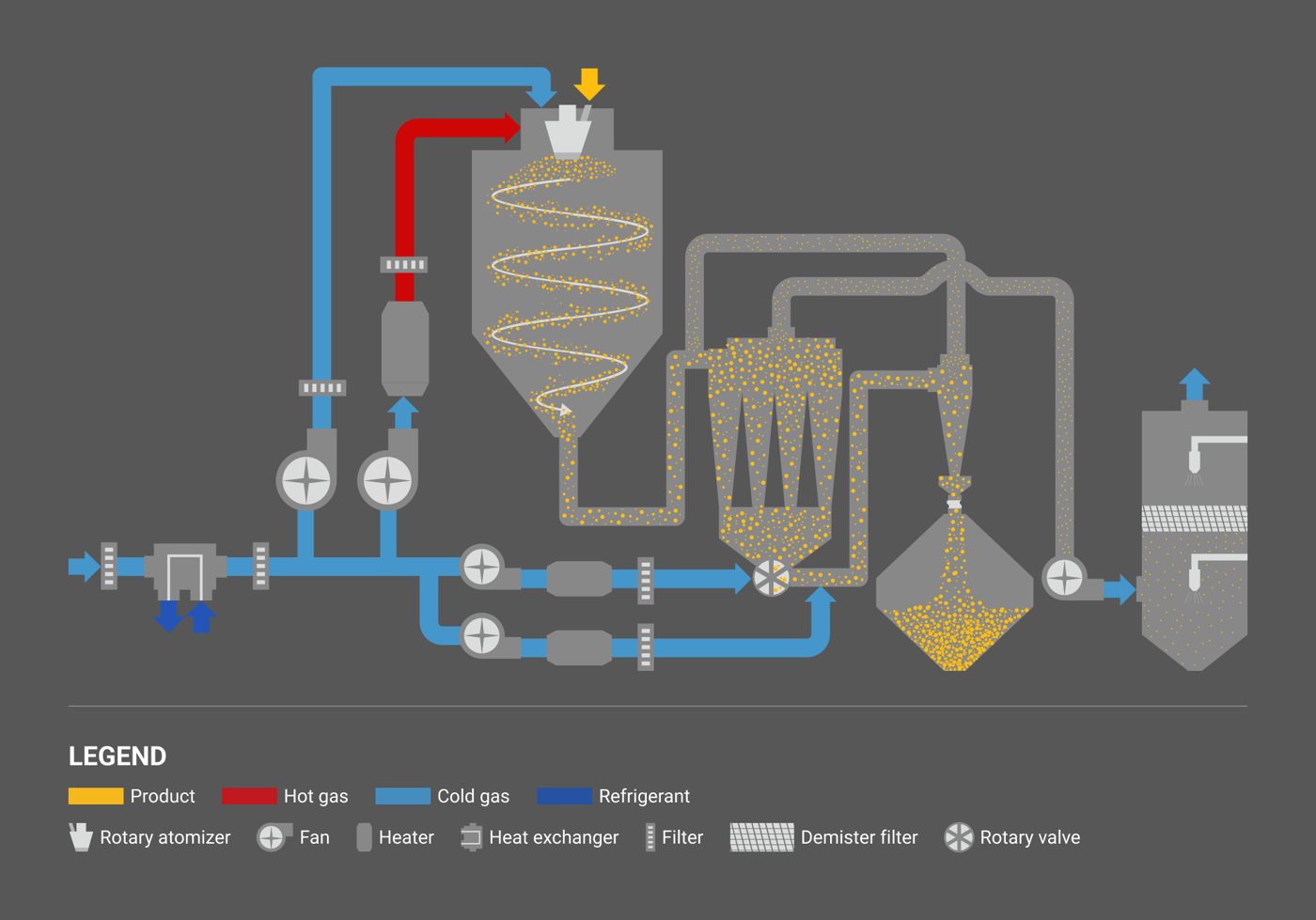
Spray drying line with dehumidified process air and cooled pneumatic conveying
Process flow: PRECI

Larger and special trials in Japan

TR120, TR160, P260 and D350 spray dryers, closed‑cycle systems and organic solvent feeds at PRECI's Powder Technical Centers in Kawasaki, arranged by our team.

Full specifications →

Service content

Scope of supply

Provided by PTC ASEAN

  • Spray drying equipment with feed pumps, agitators, tanks and weighing
  • Water or solvent for start‑up and flushing as required, including deionized water
  • Feed preparation where required
  • Packaging and dispatch of the recovered powder
  • Equipment cleaning after each run

Provided by the customer

  • Feed liquid, or raw materials for preparation at PTC ASEAN
  • Material data, including the Safety Data Sheet (SDS)
  • Any additional items agreed at the technical consultation

Principle

Advantages of spray drying

Atomized liquid meets hot gas and is dried and granulated in one step.

Spray drying: from droplet to particleSolidsHeatWater vapourHot gasAtomizer1 DropletLiquid feed: solids in water2 EvaporationHeat in, water vapour out3 Shell formsSolids build up at the surface4 Dry particleCollected as powderSpray dryingfrom droplet to particleSolidsHeatWater vapourHot gas1 DropletLiquid feed: solids in water2 EvaporationHeat in, water vapour out3 Shell formsSolids build up at the surface4 Dry particleCollected as powder

One step

Liquid becomes powder directly, without separate drying, milling and classifying steps.

Spherical particles

Surface tension forms round droplets, giving free‑flowing powder.

Short drying time

Drying takes seconds, so heat exposure stays low for sensitive products.

Adjustable properties

Particle size, moisture and bulk density are set through the operating conditions.

Continuous operation

Feed and powder recovery run continuously for production.

Sharp size distribution

Especially with a rotary atomizer.


How spray drying works, on TSK →

Atomization

Three ways to atomize

The atomizer sets the droplet size, and with it the particle size of the powder.

Rotary atomizer

About 20–200 µm. Speed controls size. A large orifice resists clogging and gives a narrow distribution.

At PTC ASEAN: TR80, P260

Two‑fluid nozzle

A few µm to about 20 µm. Used mainly in small dryers.

At PTC ASEAN: SB39, TR80, P260

Pressure nozzle

Low running cost. Suited to producing one product in volume.

At PTC ASEAN: P260

Videos: PRECI

Applications

Where spray drying is used

Foods

Coffee, tea, plant extracts, flavourings, spices and seasonings, proteins, collagen peptides, starch, dextrin, oligosaccharides, vitamins, organic acids, natural colours, gums, oil emulsion microcapsules, egg white, enzymes, yeast, animal feeds

Pharmaceuticals

Active pharmaceutical ingredients, biopharmaceuticals, poorly soluble drug microcapsules, solid dispersions and amorphous formulations, liposomes and polymeric microspheres, antibiotics, excipients, PLA, PLGA, herbal medicines, supplements

Chemicals

Silica, calcium carbonate, catalysts, polymers, pigments and dyes, detergents and surfactants, zeolite, cosmetics, fertilizers, resins and resin emulsions, bioplastics, battery materials, titanium oxide, calcium phosphate

Ceramics, alloys and powder metallurgy

Alumina, zirconia, silica, silicon nitride, silicon carbide, aluminium and boron nitride, barium titanate, ferrite, yttria, ceria, cermets, tungsten carbide, nickel, titanium and cobalt alloys, rare metals, bioceramics

Advanced materials

Electronic materials, MLCC, semiconductors, magnetic and dielectric materials, hydroxyapatite, cellulose nanofibers, graphene, carbon nanotubes, toners, abrasives, lithium‑ion and sodium‑ion battery materials, all‑solid‑state battery materials

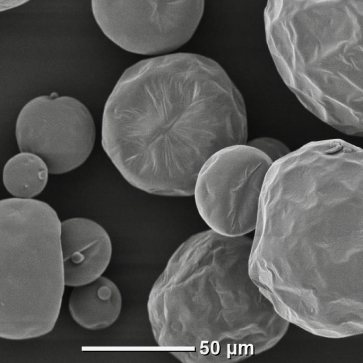
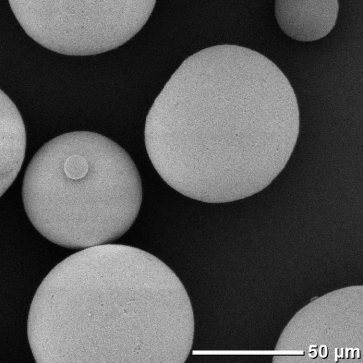
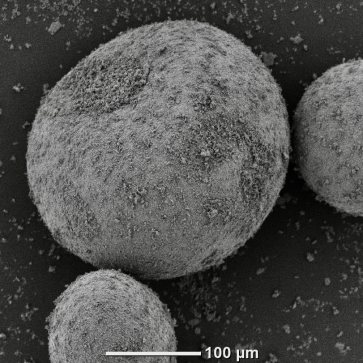
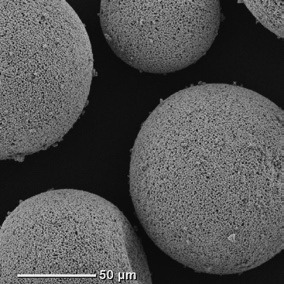
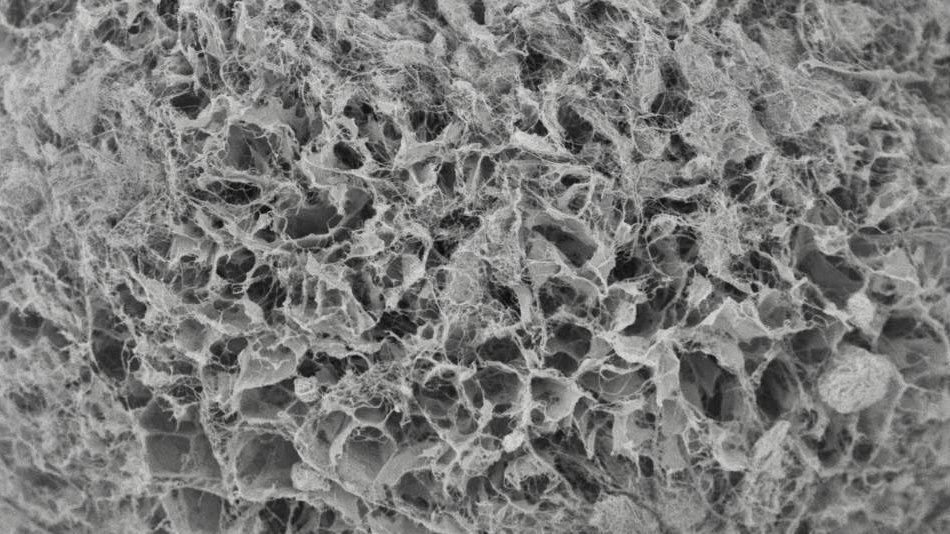
Lactose, particles under the scanning electron microscope
Lactose
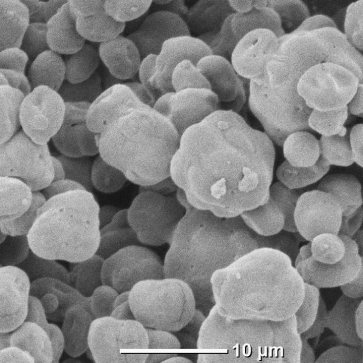
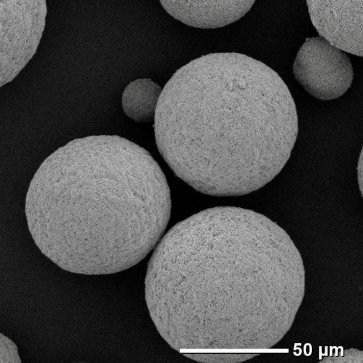
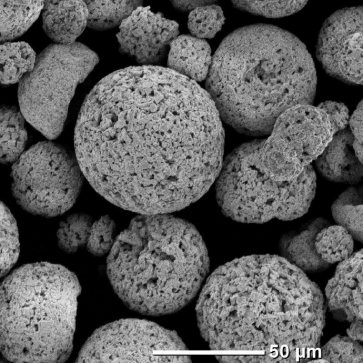
Yeast, particles under the scanning electron microscope
Yeast
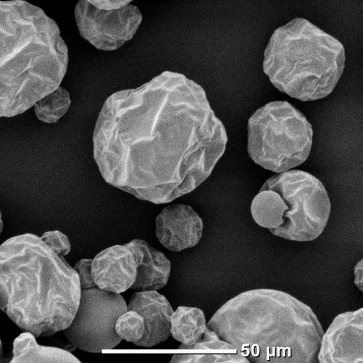
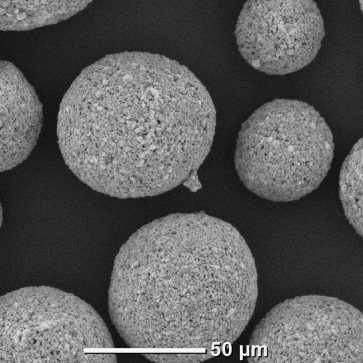
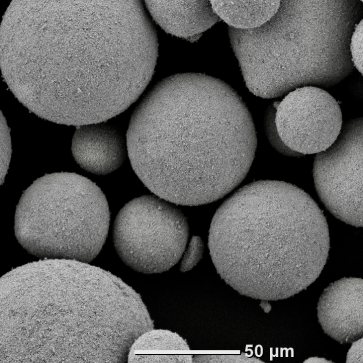
Citric acid, particles under the scanning electron microscope
Citric acid
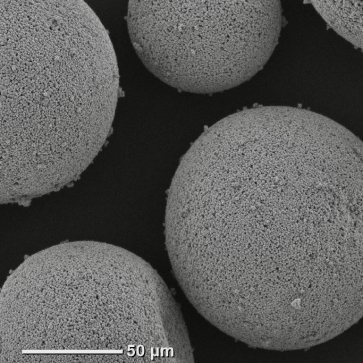
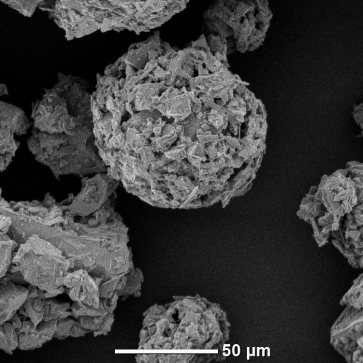
Zeolite, particles under the scanning electron microscope
Zeolite
Silica, particles under the scanning electron microscope
Silica
Zirconia, particles under the scanning electron microscope
Zirconia
WC-(Fe-Ni) alloy, particles under the scanning electron microscope
WC-(Fe‑Ni) alloy
Cobalt, particles under the scanning electron microscope
Cobalt
Molybdenum, particles under the scanning electron microscope
Molybdenum
Yttrium oxide, particles under the scanning electron microscope
Yttrium oxide
Indium oxide, particles under the scanning electron microscope
Indium oxide

Scanning electron microscope. Images: PRECI

Start small

A small evaluation trial comes first. Scale‑up to production follows on the same process.

Case studies

Spray drying in practice

Case studies from trials at PTC ASEAN and at PRECI's centers in Japan.

All case studies on TSK →

Step by step

How to request a trial

1

Contact

Reach us through the contact form, by email or by phone.

2

Consultation

We discuss your material and goals. You complete the confirmation sheet.

3

Proposal

We send a proposal and quotation.

4

Scheduling

The run date is fixed when you place the order.

5

Material delivery

Send your material by the day before the run. Hand delivery is also possible.

6

Processing

We run your material on the scheduled day.

FAQ

Before you request a trial

What particle size can you reach?

It depends on the feed. Lower solids and viscosity give smaller particles. Submicron particles have been collected with bag filters, and particles of about 400 µm with PRECI's largest trial dryer.

What is the maximum viscosity?

Feeds above 10,000 mPa·s have been sprayed, while some feeds of a few hundred mPa·s blocked the line. Polymer solutions may form strings. A first trial decides, and dilution on site often helps.

How soon can a trial run?

Within days when equipment is free. Allow longer when the schedule is full.

Is my information kept confidential?

Yes. We sign a confidentiality agreement on request and do not disclose your information to others.

Discuss your material

Send us your material and target. We reply within one working day.