The problem with grinding
Plastic powders are used for coating, moulding, additive manufacturing and as additives. Most are made by grinding, which heats the resin by friction, can degrade it, and produces irregular, stringy or whisker‑like particles with poor size uniformity.
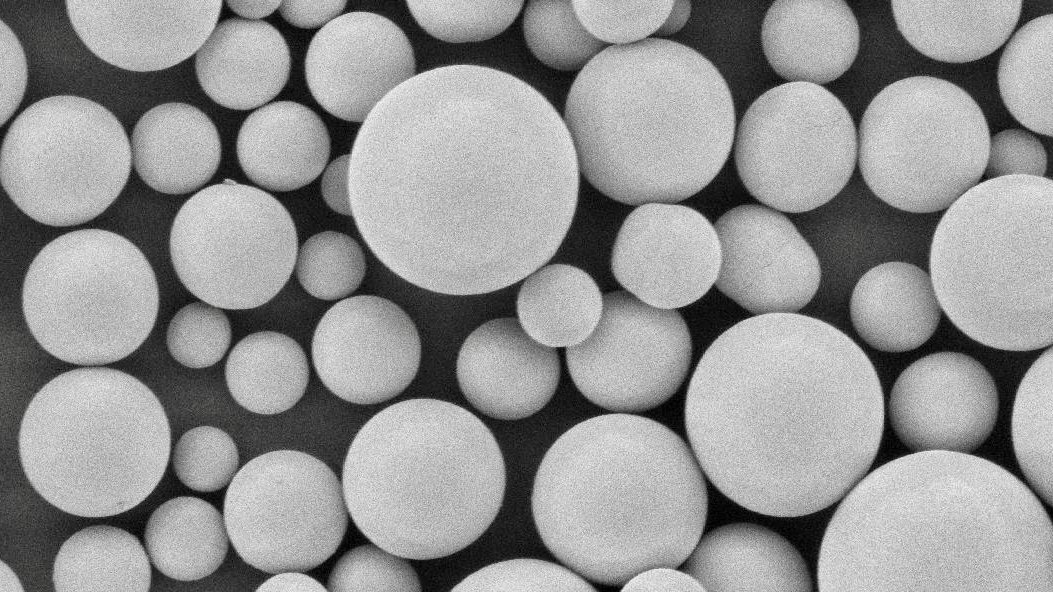
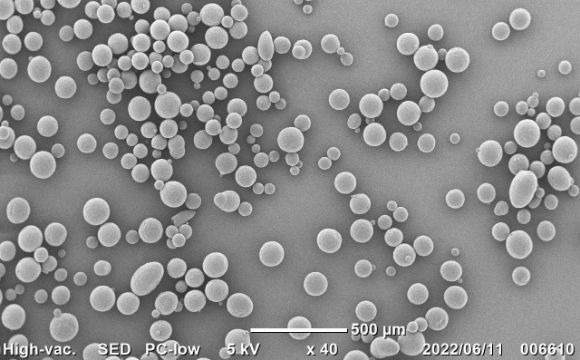
Spray drying, spray cooling and freeze granulation form the particle from a liquid instead, so each one comes out spherical, free‑flowing and within a narrow size range.
Materials
- Thermoplastics: PE, PP, ABS, acrylic, and engineering plastics such as PA (nylon), PET, PC, PEEK, PPS and PTFE, plus thermoplastic elastomers.
- Thermosets: phenolic, epoxy, melamine, urea and polyimide resins, and thermoset elastomers.
- Liquids: polymer latex emulsions and melamine or urea initial condensates.
Spray drying
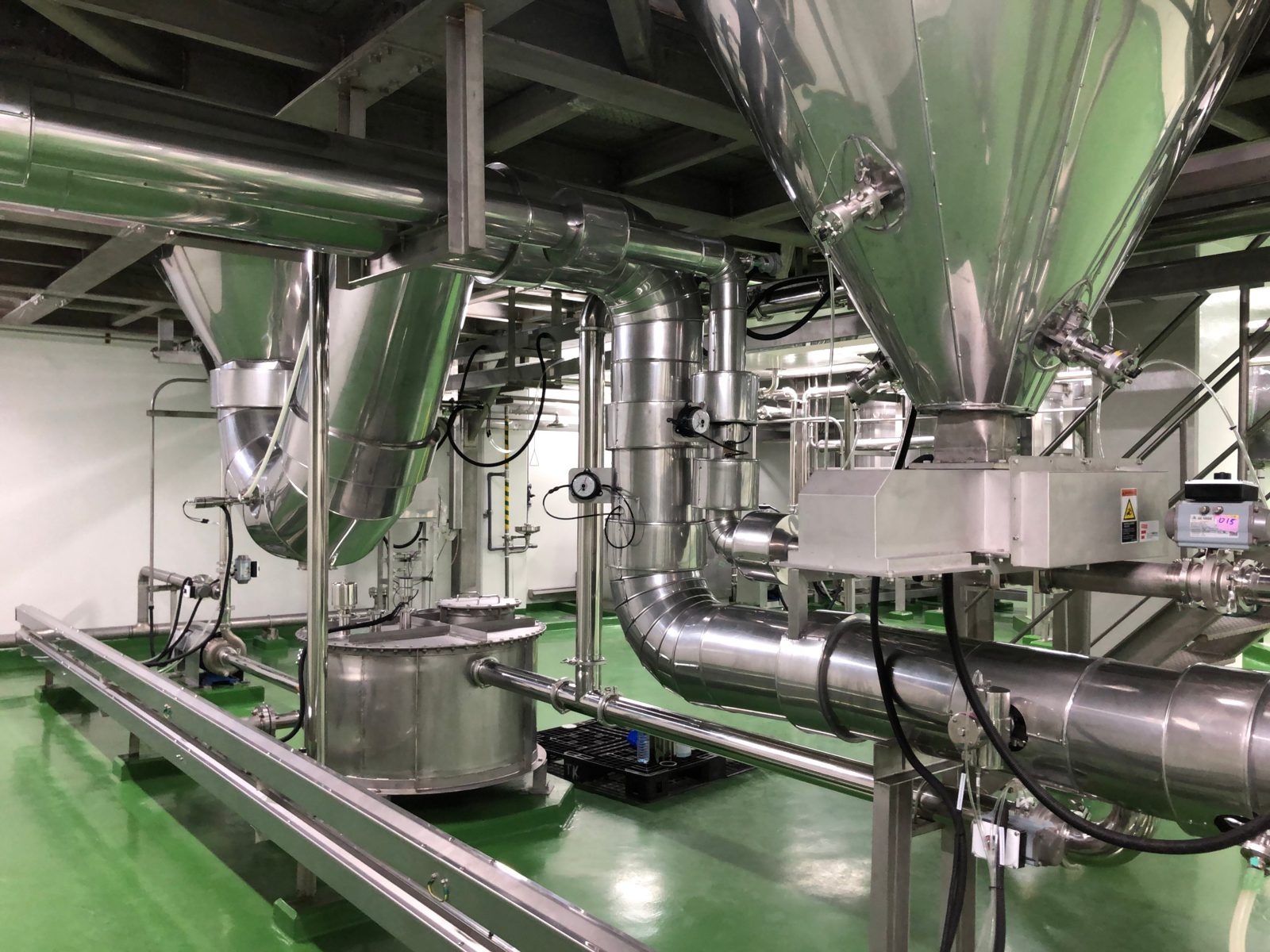
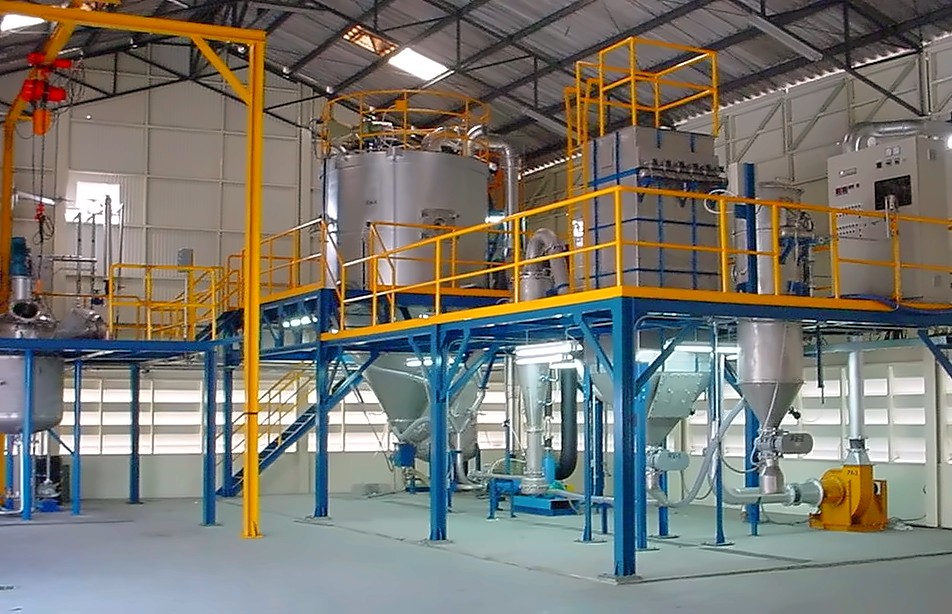
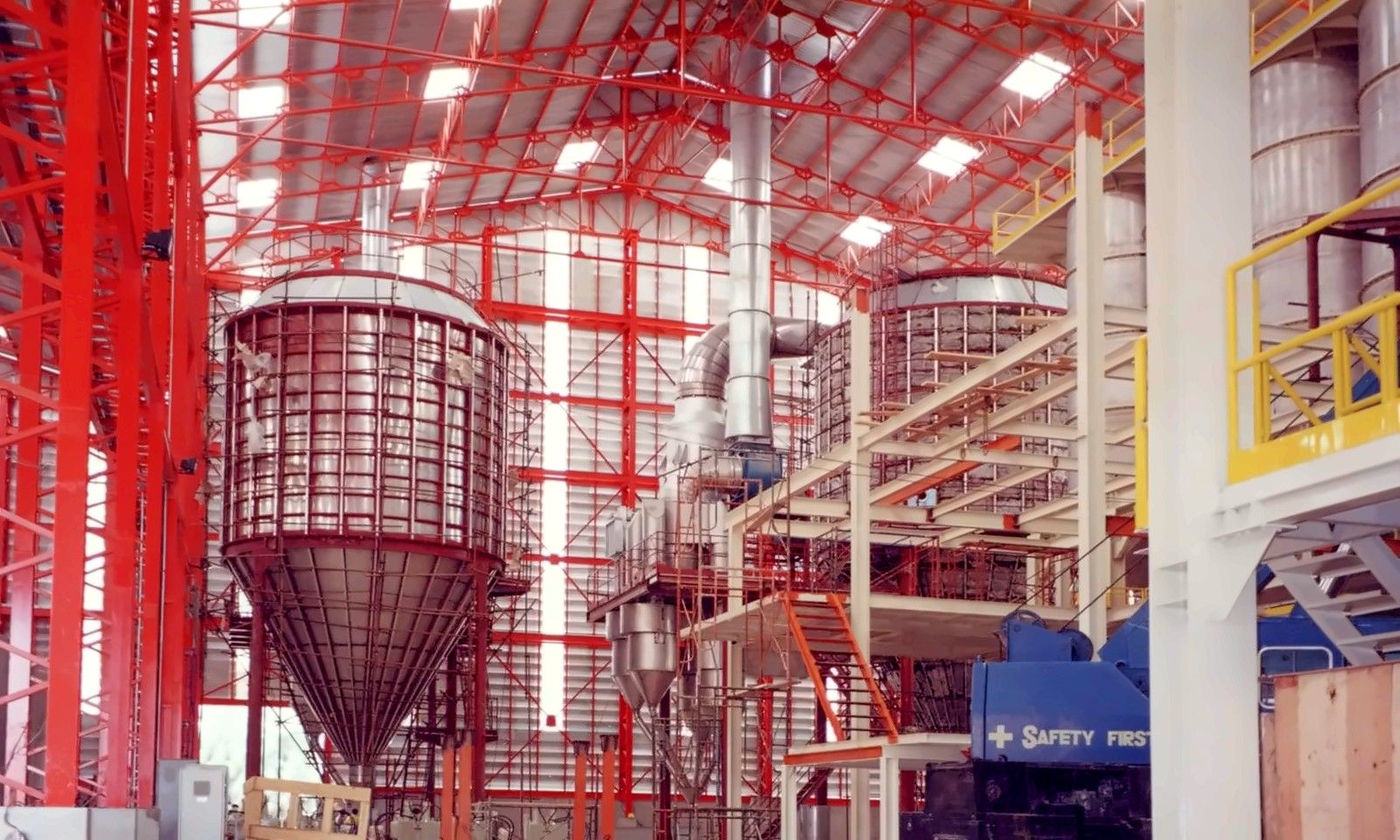
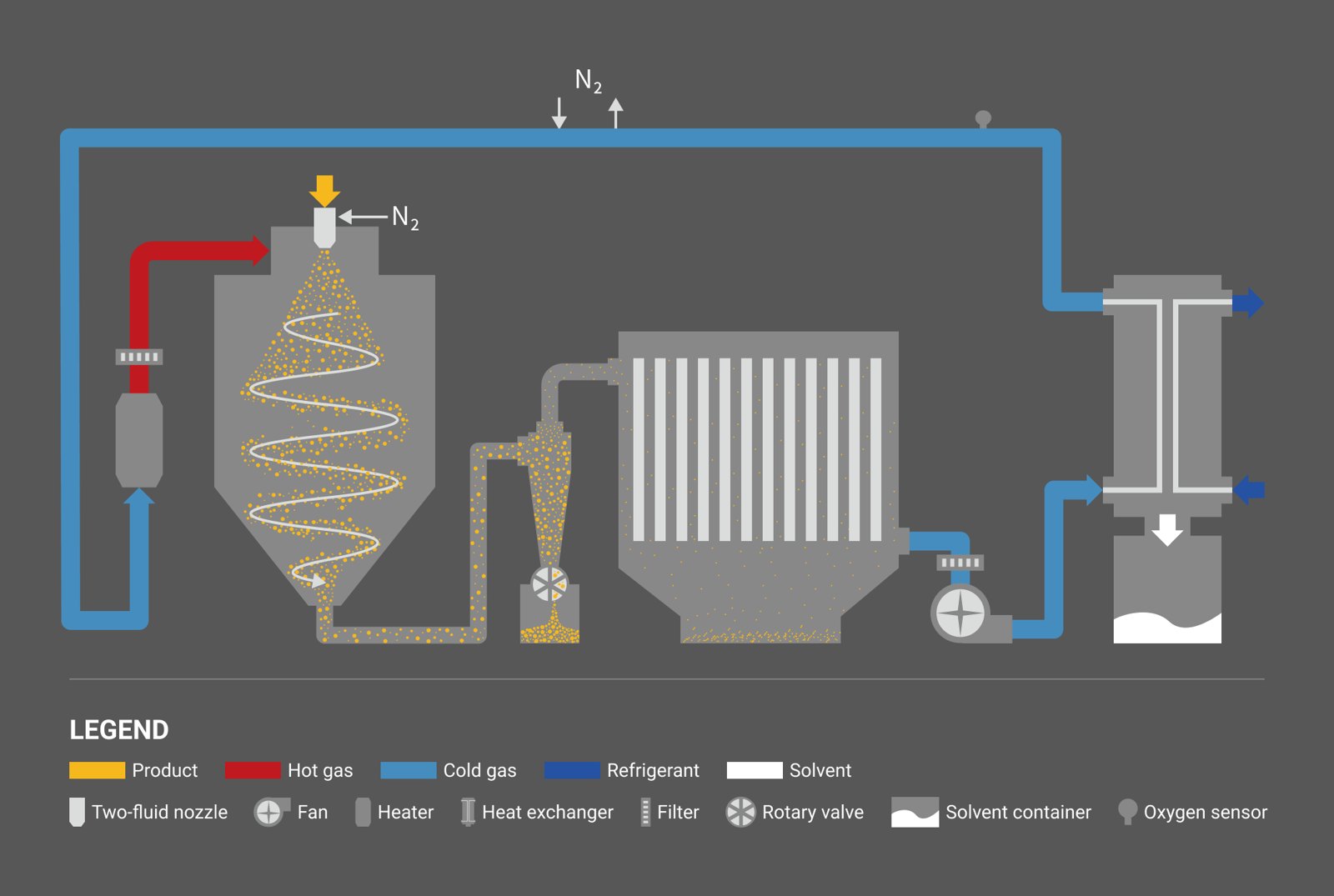
A resin solution or dispersion is atomized into the drying chamber and the liquid evaporates. Cooling air in the lower chamber cools the powder quickly before it is collected in a cyclone. Melamine and urea resins are dried from their condensation liquids. Organic solvents or oxidation‑sensitive resins run in a closed‑cycle nitrogen system.
Result: spherical granules with good flow and a sharper size distribution than other drying methods.
Spray cooling
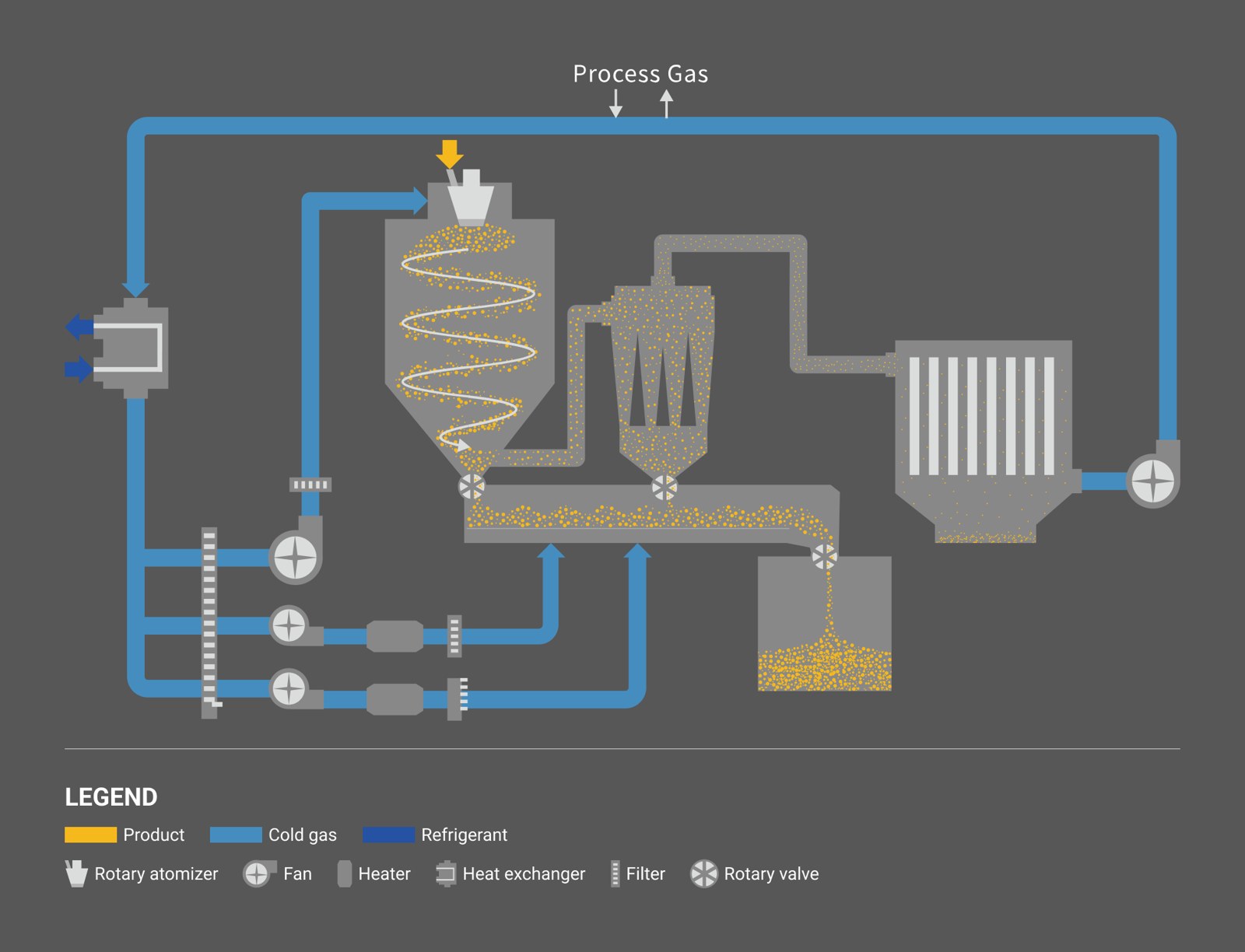
Molten thermoplastic is atomized into a cooling chamber and meets cooling gas below its melting point. The droplets solidify into beads or prills, from a few micrometers to about 500 µm, in one continuous step and with almost no moisture.
Result: spherical, free‑flowing granules with a stable size distribution.
Freeze granulation
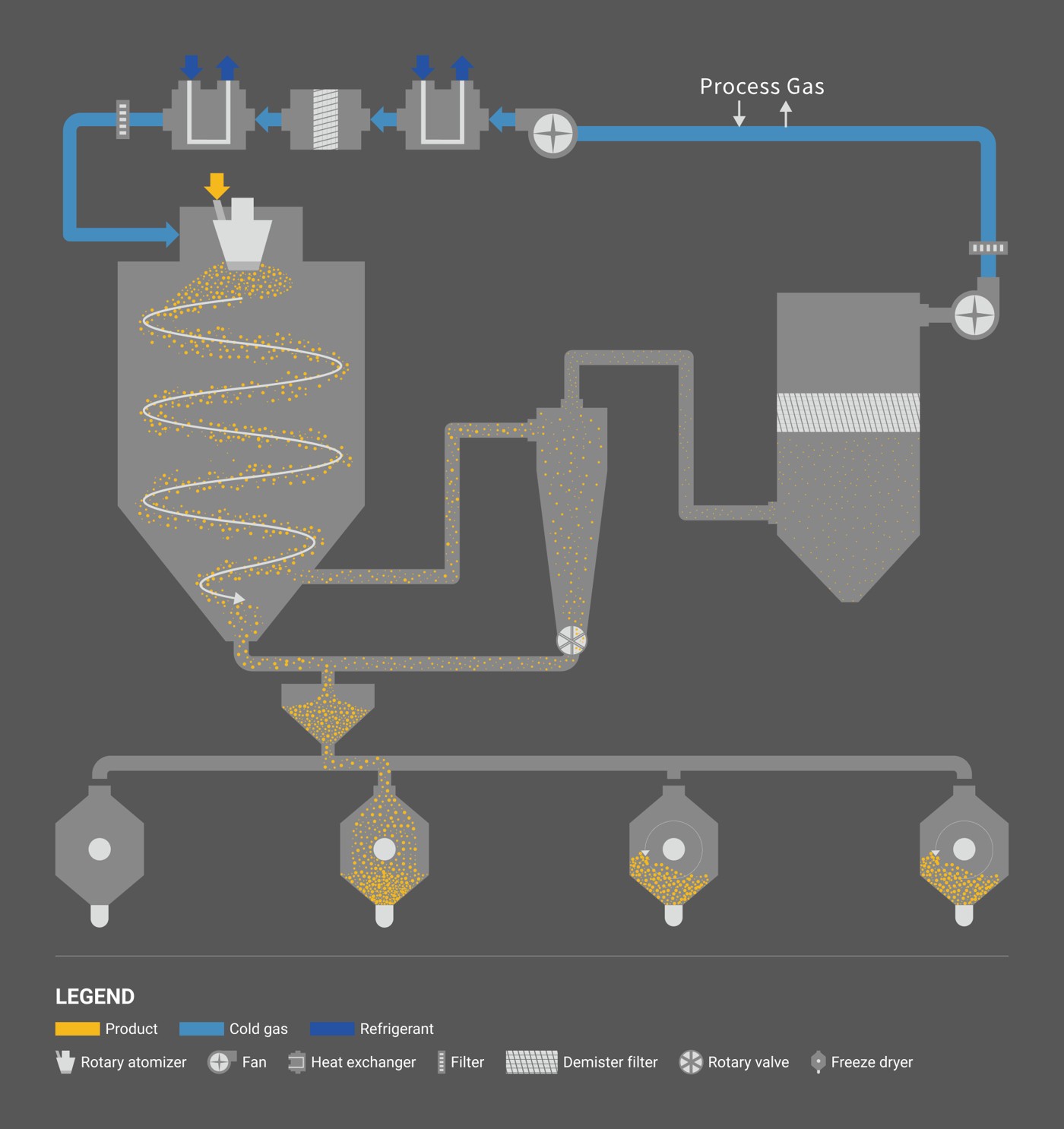
Droplets are atomized and frozen continuously, then freeze‑dried by sublimation. Several freeze dryers can be connected and switched automatically for semi‑continuous operation. The CS220 runs without liquid nitrogen, which keeps operating cost below grinding freeze‑dried material.
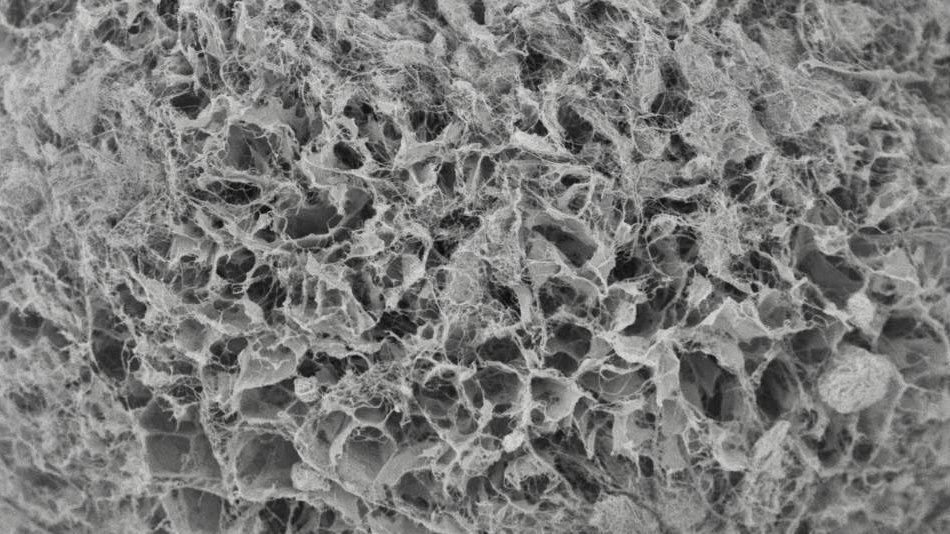
Result: spherical, porous but structured granules of 10–500 µm, with uniform density from surface to core, no heat impact and minimal oxidation.
Process conditions that matter
For low‑Tg or low‑melting resins, process temperature and droplet fall time are kept low enough to prevent softening. Dehumidified, low‑dew‑point process gas allows a lower drying temperature.
Solids concentration is balanced against viscosity, flow, cohesion and moisture; higher solids improve efficiency. In latex, surfactant and electrolyte content affect tensile strength and thermal stability. For thermosets, conditions are set from the curing temperature and specific heat.
Which process for which resin
- Spray drying: resin solutions, dispersions, latex and thermoset condensates.
- Spray cooling: thermoplastics that can be melted.
- Freeze granulation: heat‑sensitive resins and low‑density, structured granules.
Trials
Trials with your resin are available at PRECI's Powder Technical Centers in Japan and at PTC ASEAN in Chonburi, Thailand, together with pre- and post‑processing such as wet pulverizing, mixing, moulding and sintering.