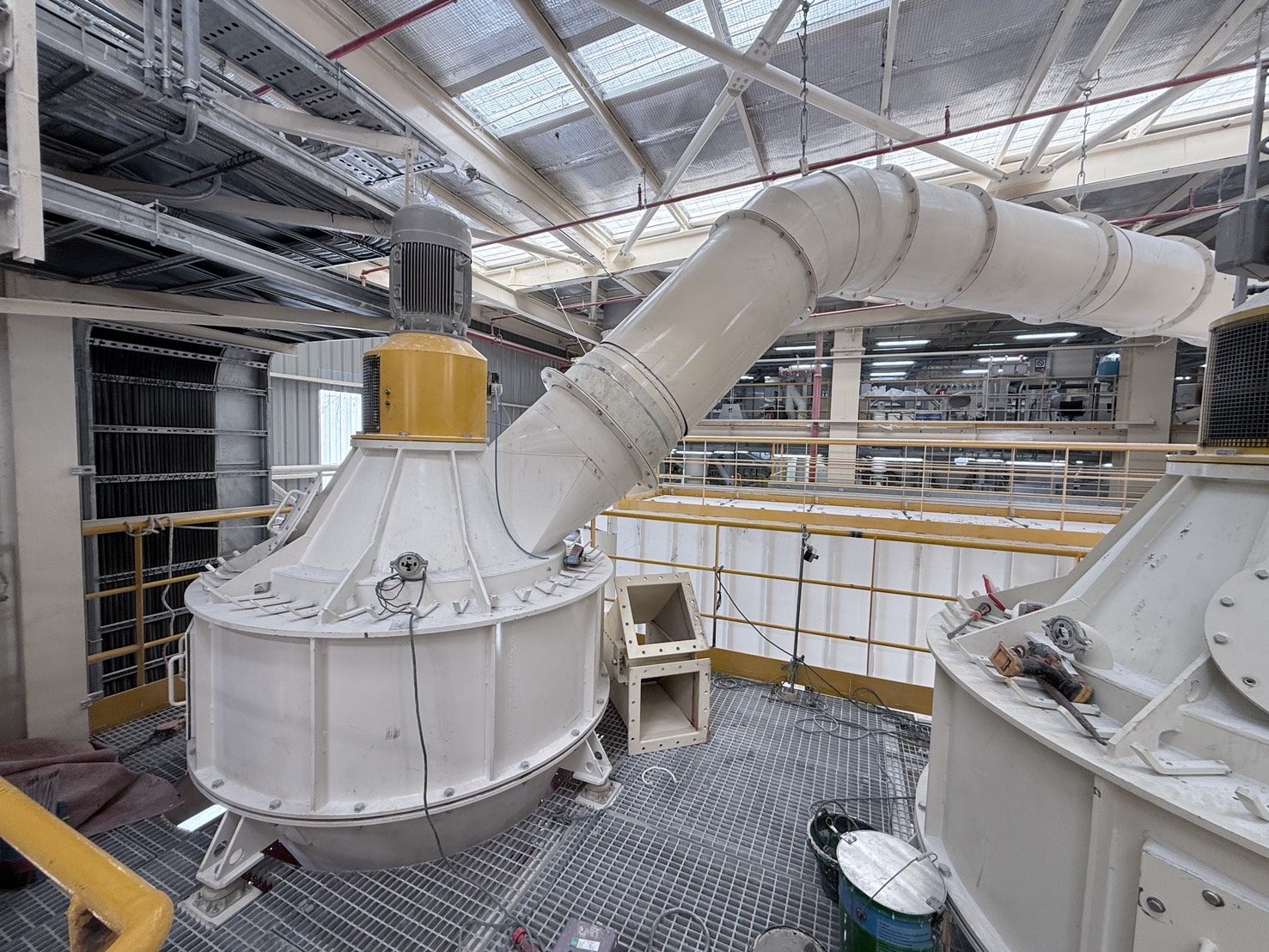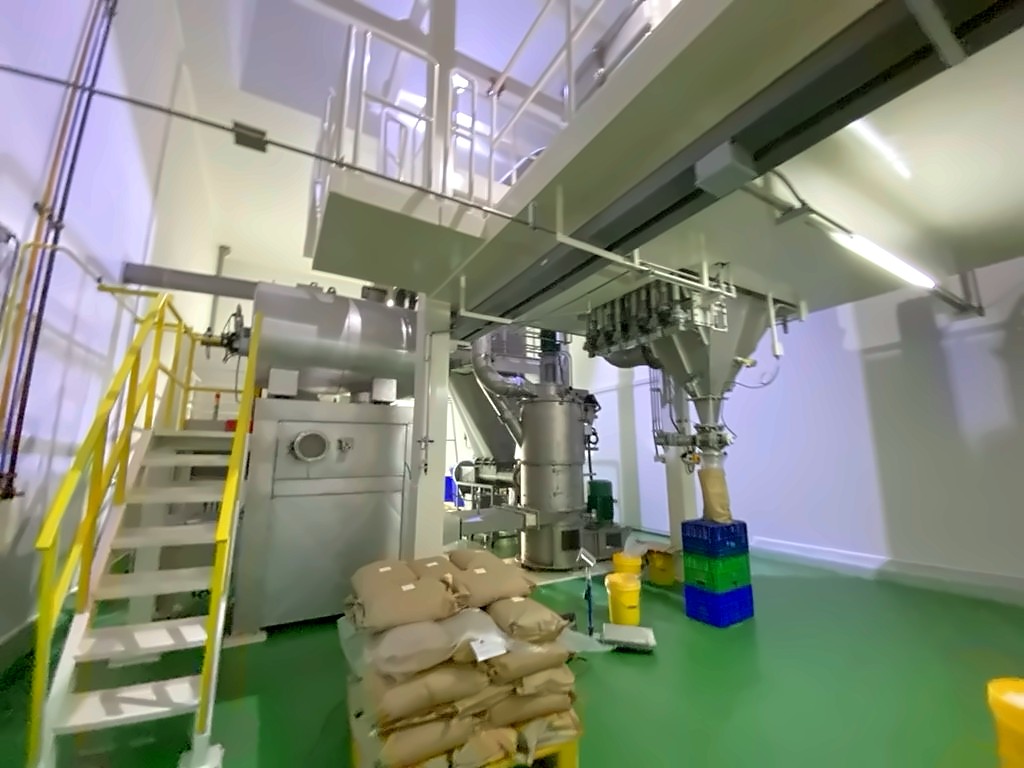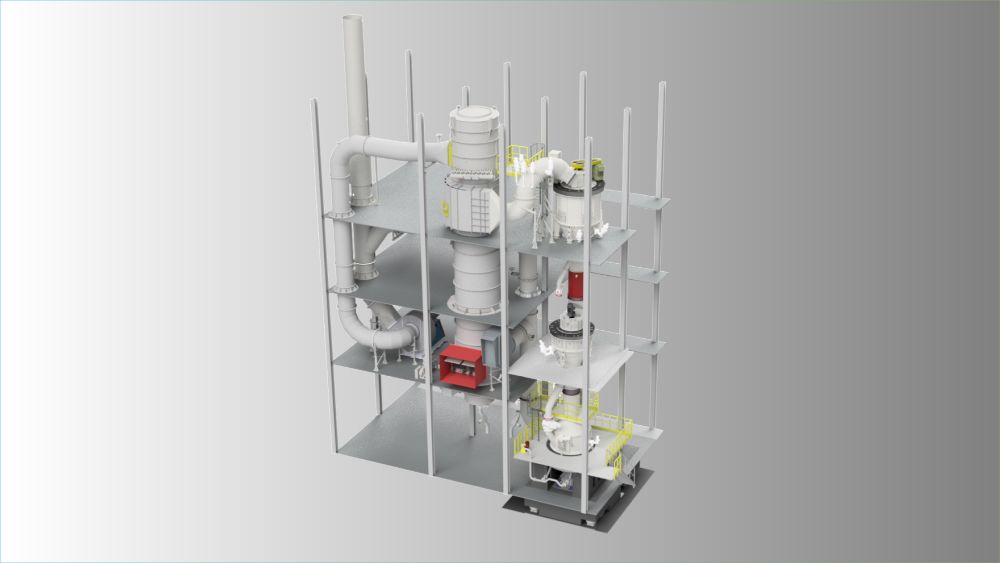
Six advantages
- Water and energy: no liquid is added, so water use and energy use fall.
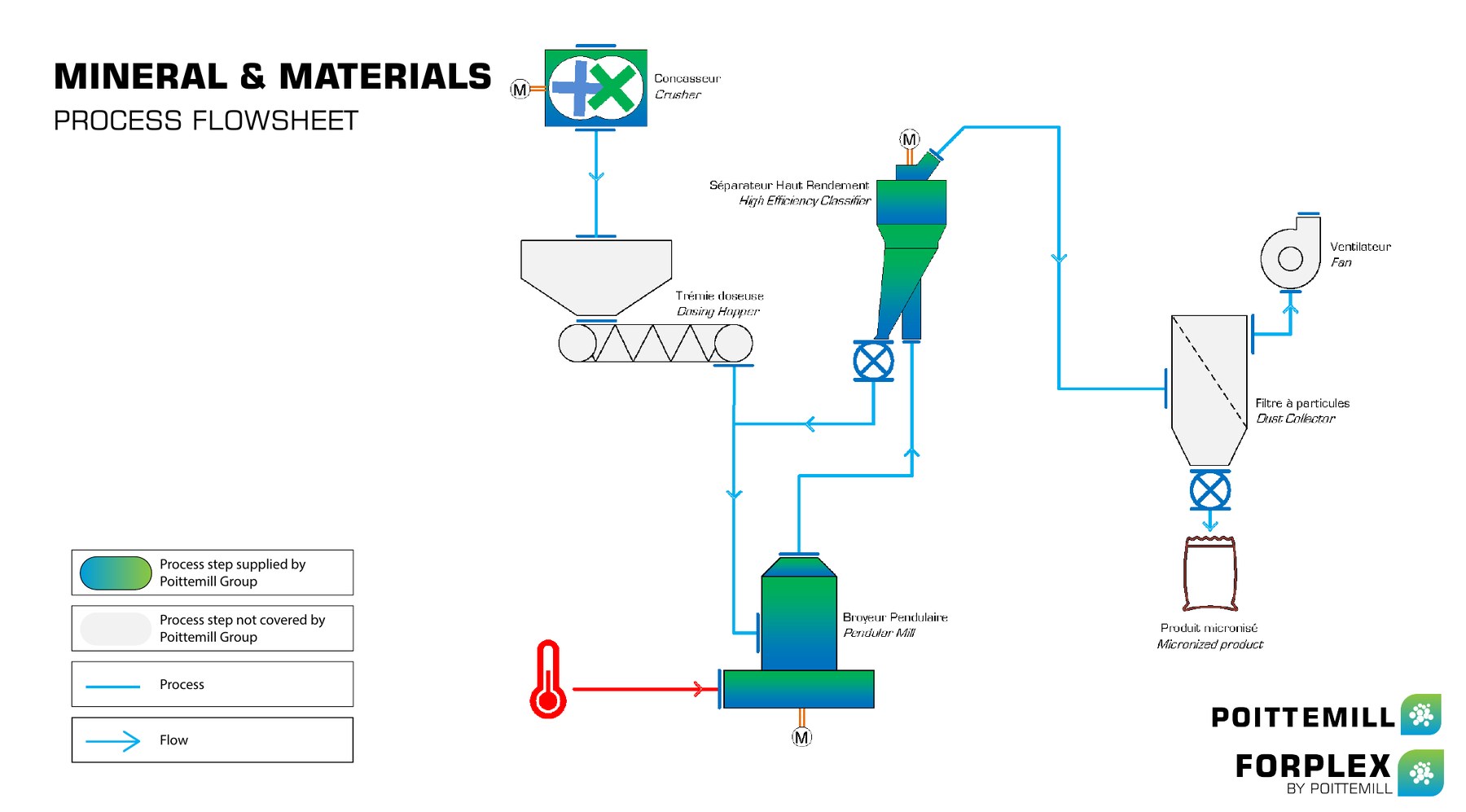
- Operating cost: no liquid handling, storage or transport, and no drying step after grinding.
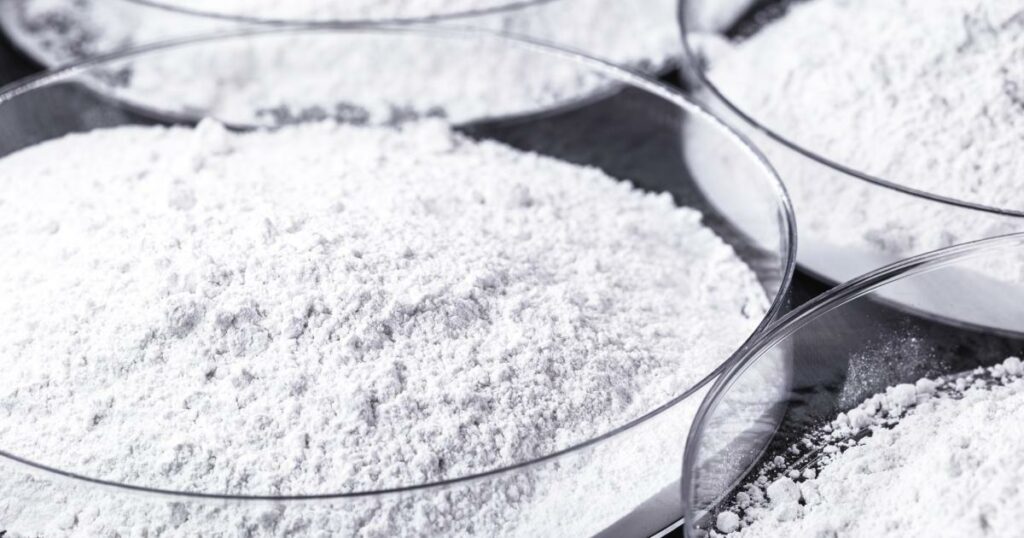
- Material properties: moisture‑sensitive food and pharmaceutical materials are not exposed to water.
- Contamination: keeping the material dry reduces the risk of cross‑contamination.
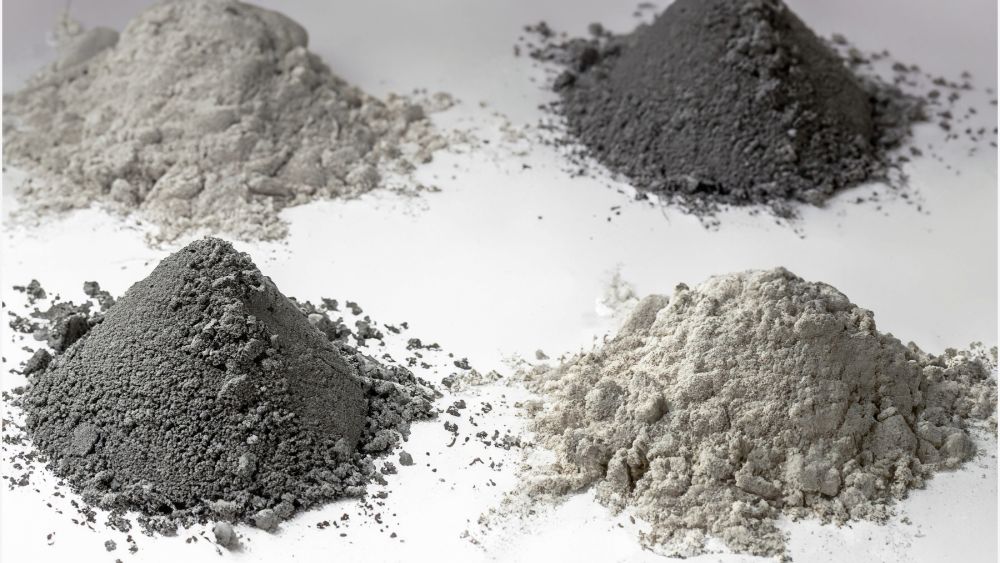
- Versatility: a wide range of materials can be dry‑milled, including some high‑moisture products. See high‑moisture products.
- Particle size: dry milling with classification generally gives a tighter particle size distribution.
When wet milling is still needed
Wet milling remains the right route when the product is a suspension or slurry, as in some fine‑ceramic and coating processes. The choice is confirmed in trials with the actual material.
Trials with your material
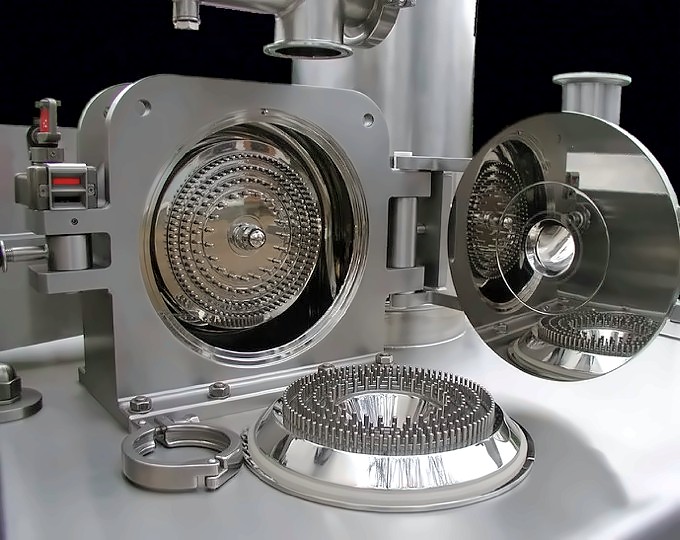
Small grinding and classification trials run at PTC ASEAN in Chonburi on a POITTEMILL FNG laboratory mill. Larger or specialised trials run at the POITTEMILL test centre in Béthune, France, at pilot and full scale, to set machine, parameters and process before you invest.