The by‑product
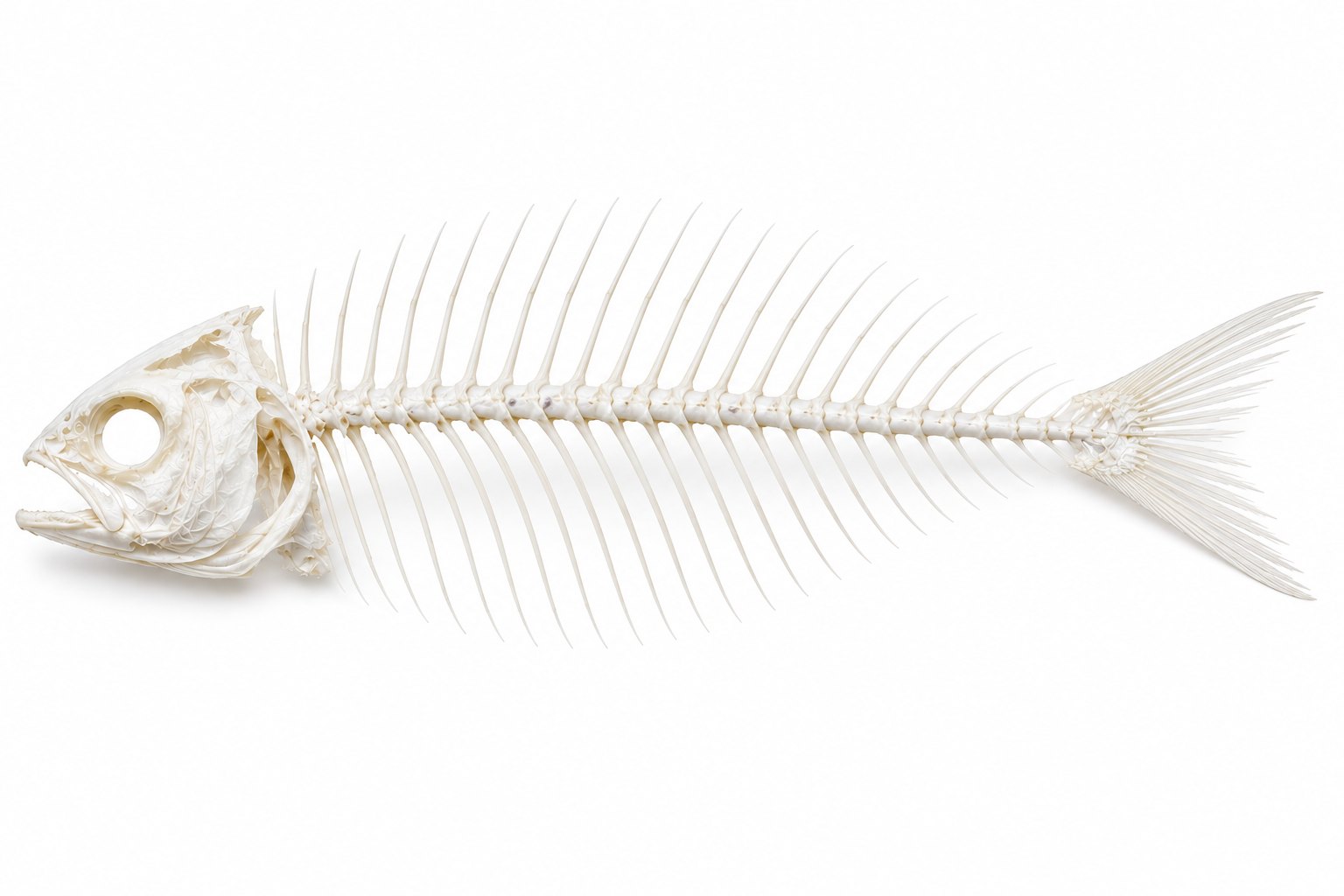
Filleting and canning leave frames, backbones and heads. The bone is mainly calcium phosphate in the form of hydroxyapatite, with collagen and residual fat.
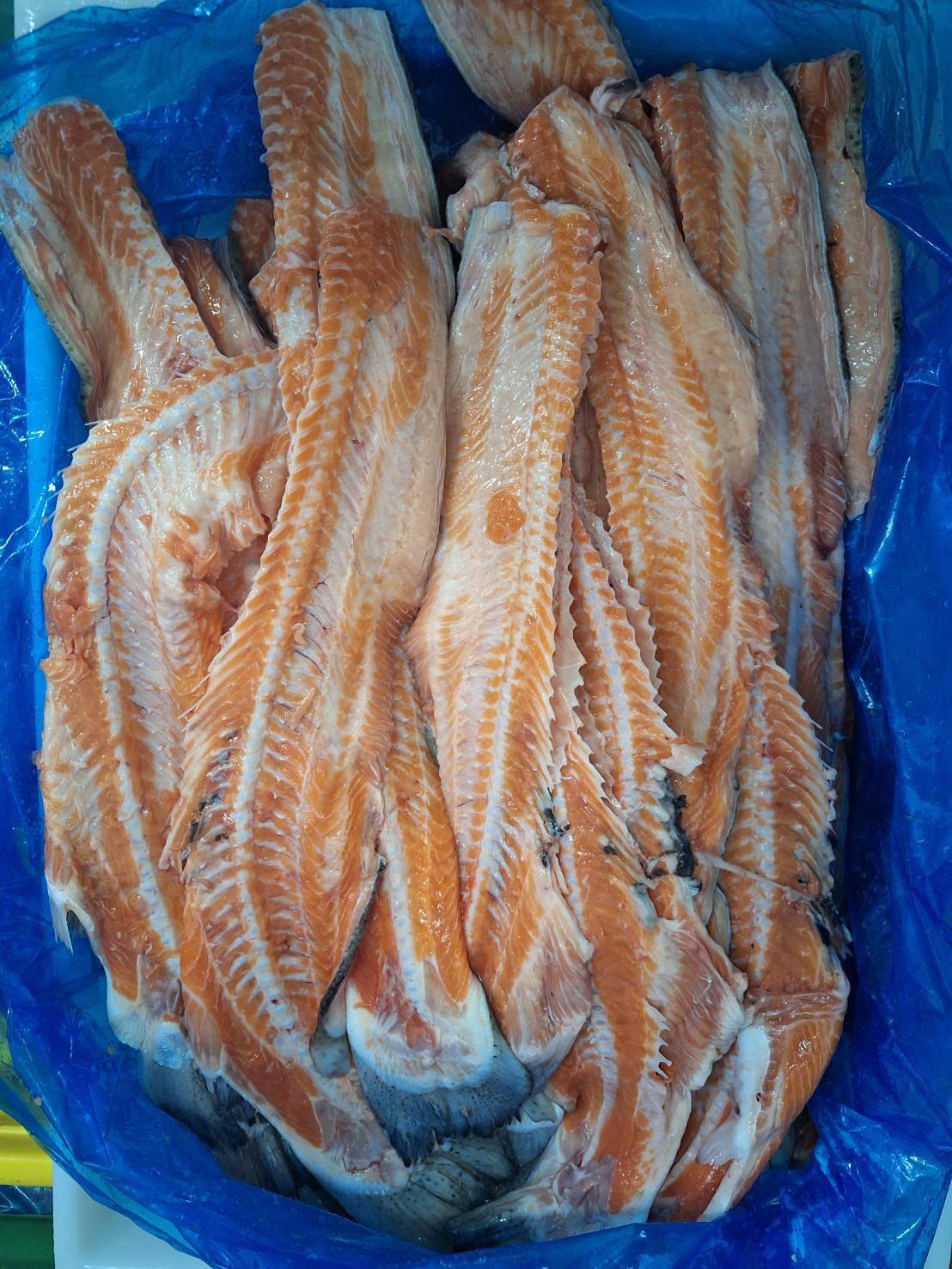
Today most of it is cooked and sold as bone meal for feed or fertilizer, the lowest step of the value ladder. The mineral itself is worth far more once it is cleaned, sized and converted.
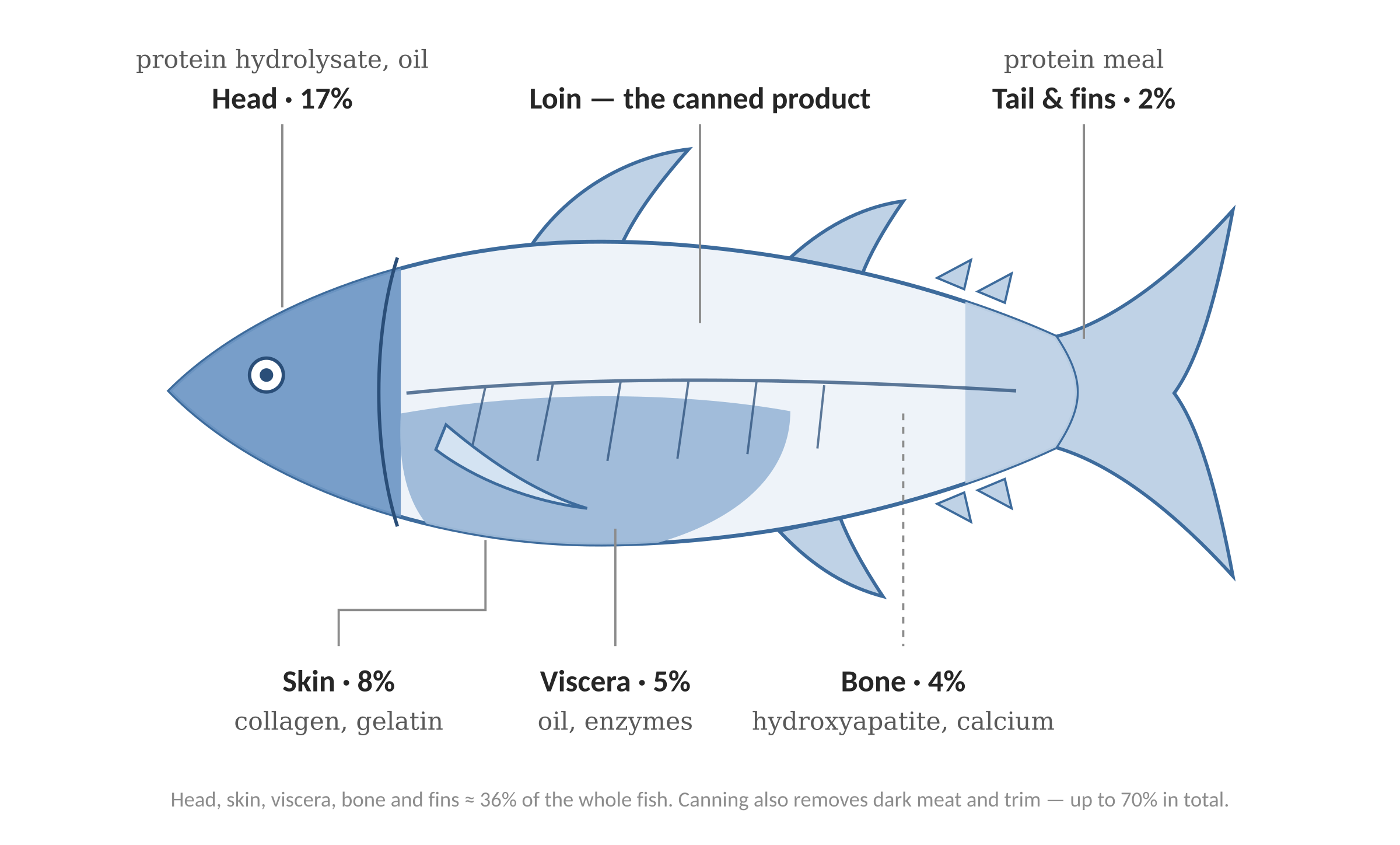
The value ladder
- Commodity: uncleaned bone and bone meal for feed.
- Refined: clean, size‑reduced bone calcium.
- Functional: fine bone powder with a defined particle size.
- Bioactive: calcium citrate or calcium lactate.
- Advanced: hydroxyapatite, a fine‑ceramic material (see Advanced materials).
Shared preparation
Bone arrives from the processing plant uncleaned. It is boiled with chemicals to clean and sterilise it and remove the organic matter, then reduced in size. At this point it is already a calcium ingredient, and it is the starting point for all three routes.
The boiling liquor goes to a decanter, which recovers fish oil as a side stream. The preparation and extraction steps were developed with a Thai university partner.
Three routes
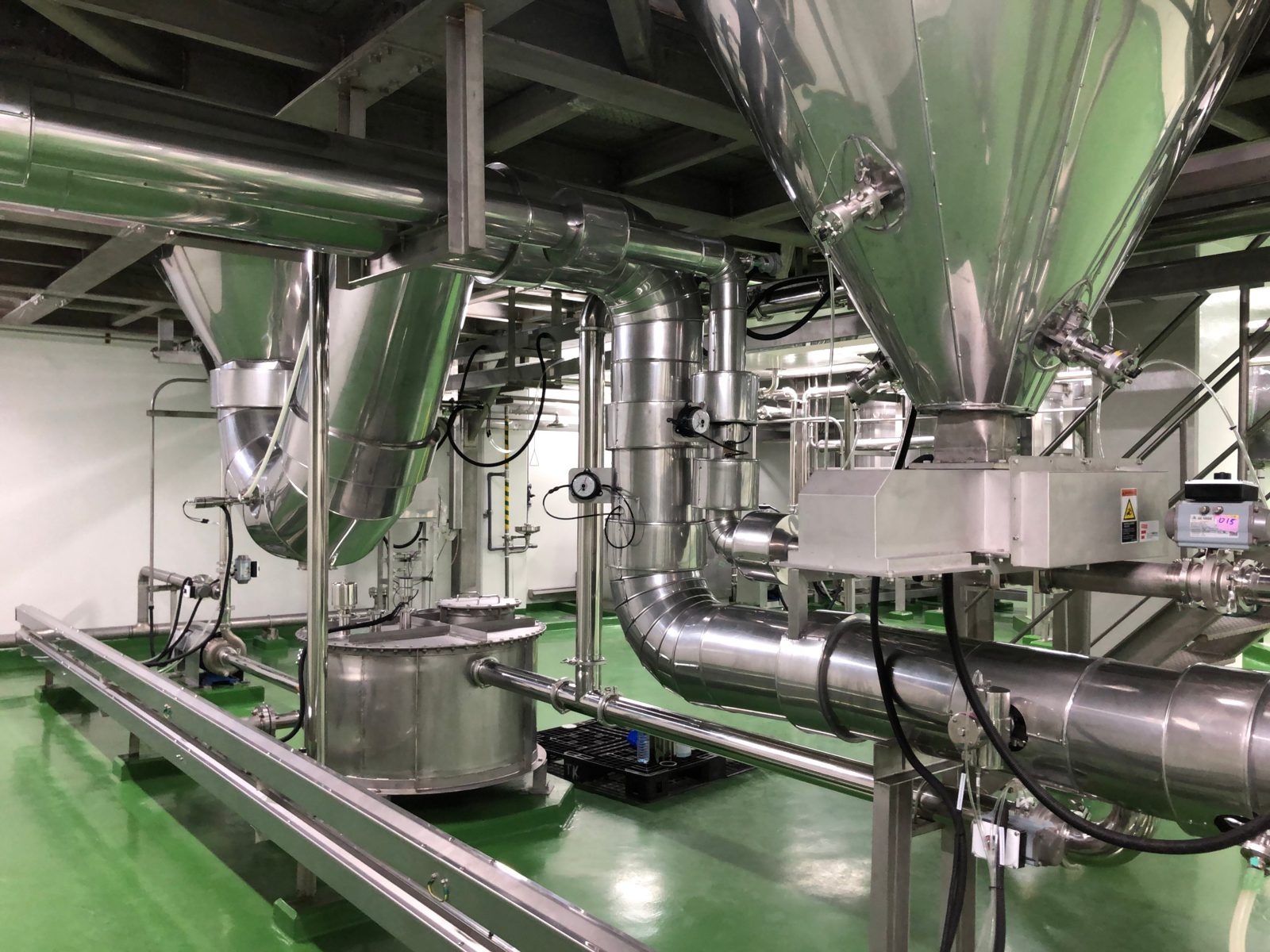
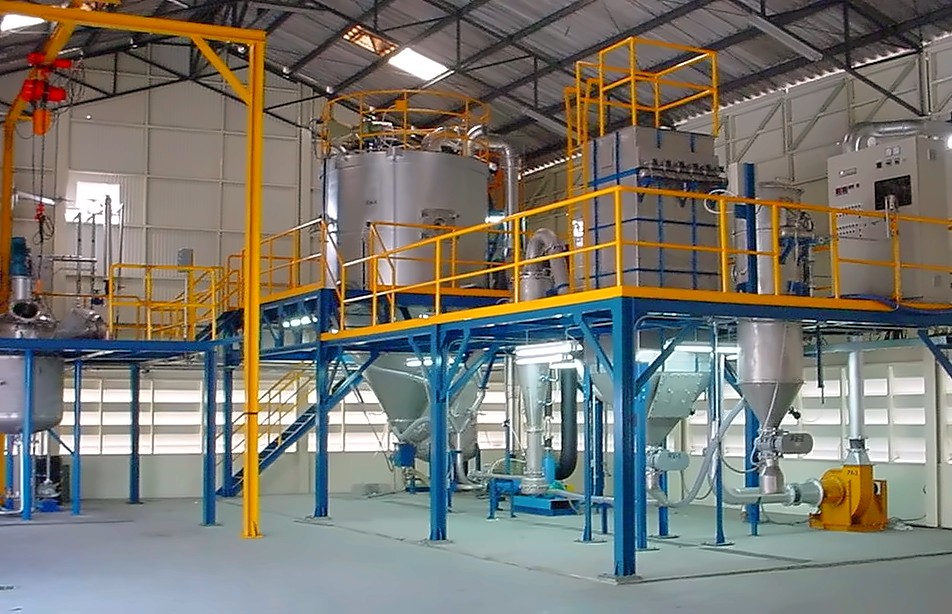
- A · Wet route: calcium is extracted in a heated tank, precipitated with alkali and re‑slurried, then spray dried on PRECI technology into calcium citrate or calcium lactate powder.
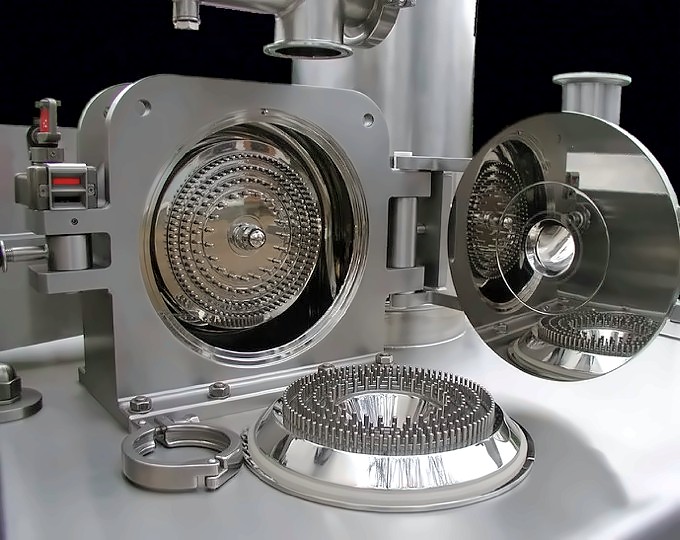
- B · Dry route: the bone is dried, then ground fine and classified on POITTEMILL technology into fine bone powder. It is the shortest route and works with the bone as it is.
- C · Hydroxyapatite, the fine‑ceramic route: from here the bone is treated as a ceramic raw material, following the same steps used for fine ceramics such as alumina and zirconia. Fine bone powder is wet‑pulverized to micron or nano size and prepared as a slurry, spray granulated on PRECI technology into uniform, free‑flowing granules, then calcined into hydroxyapatite.
Results
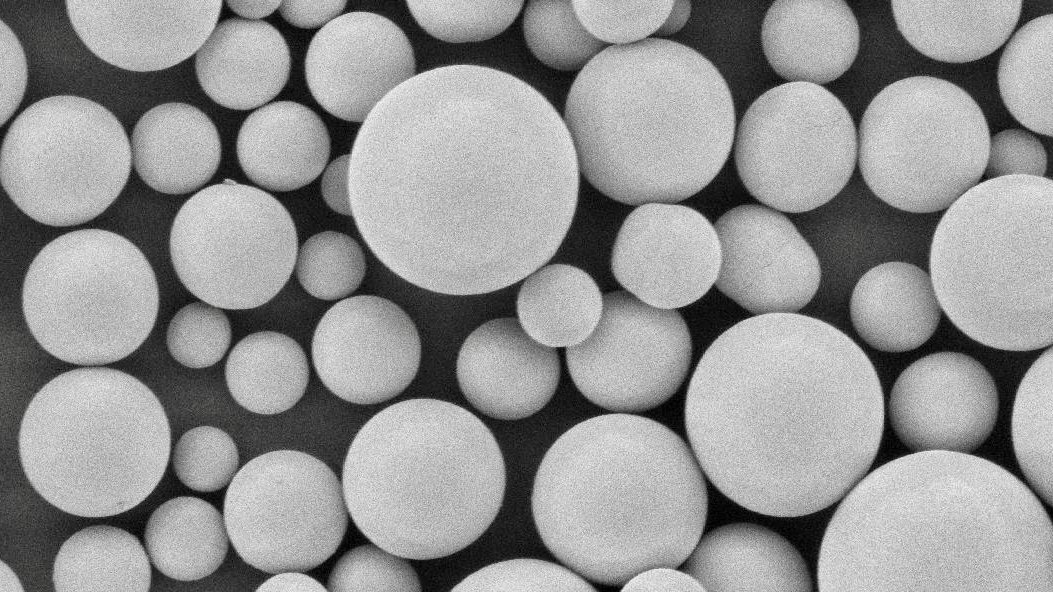
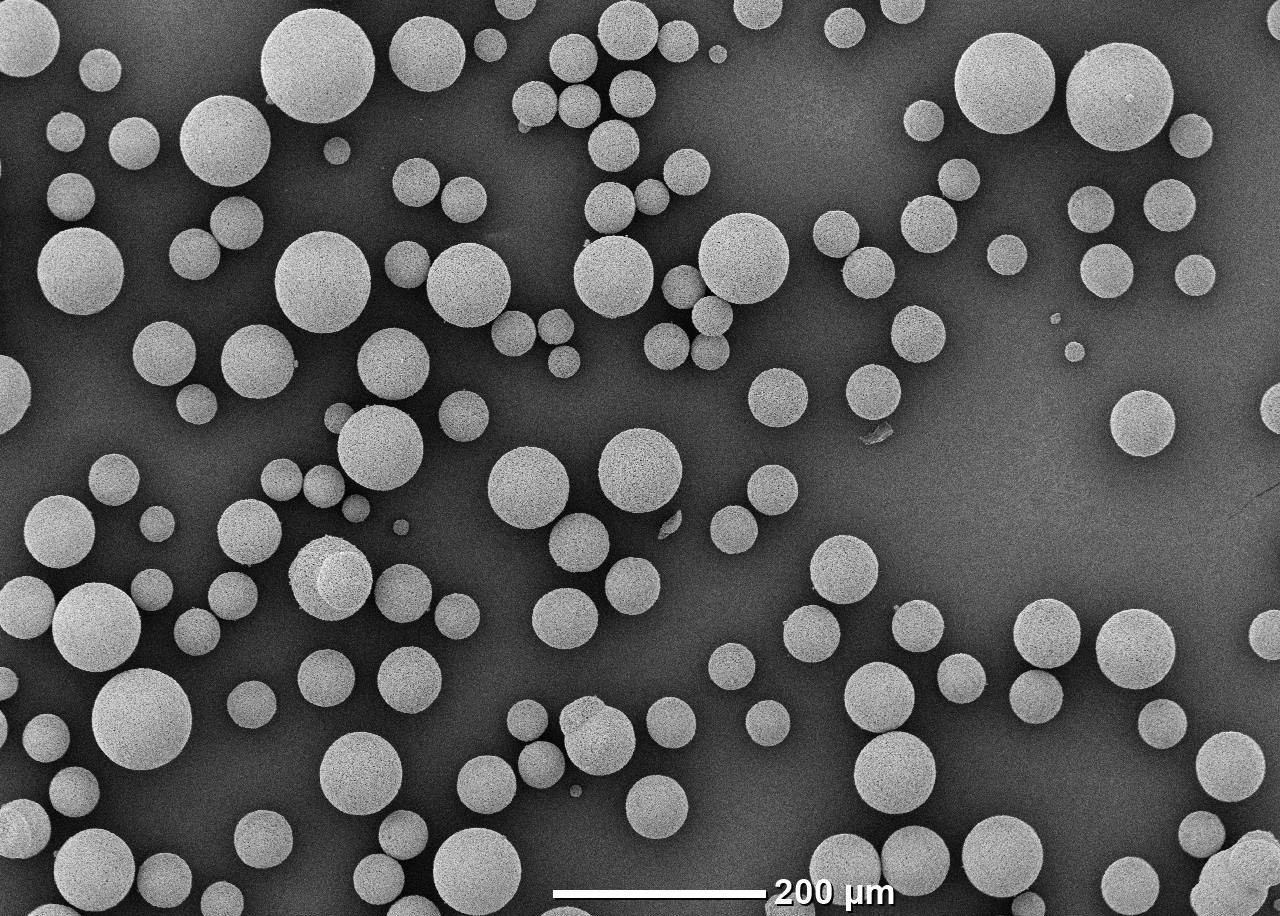
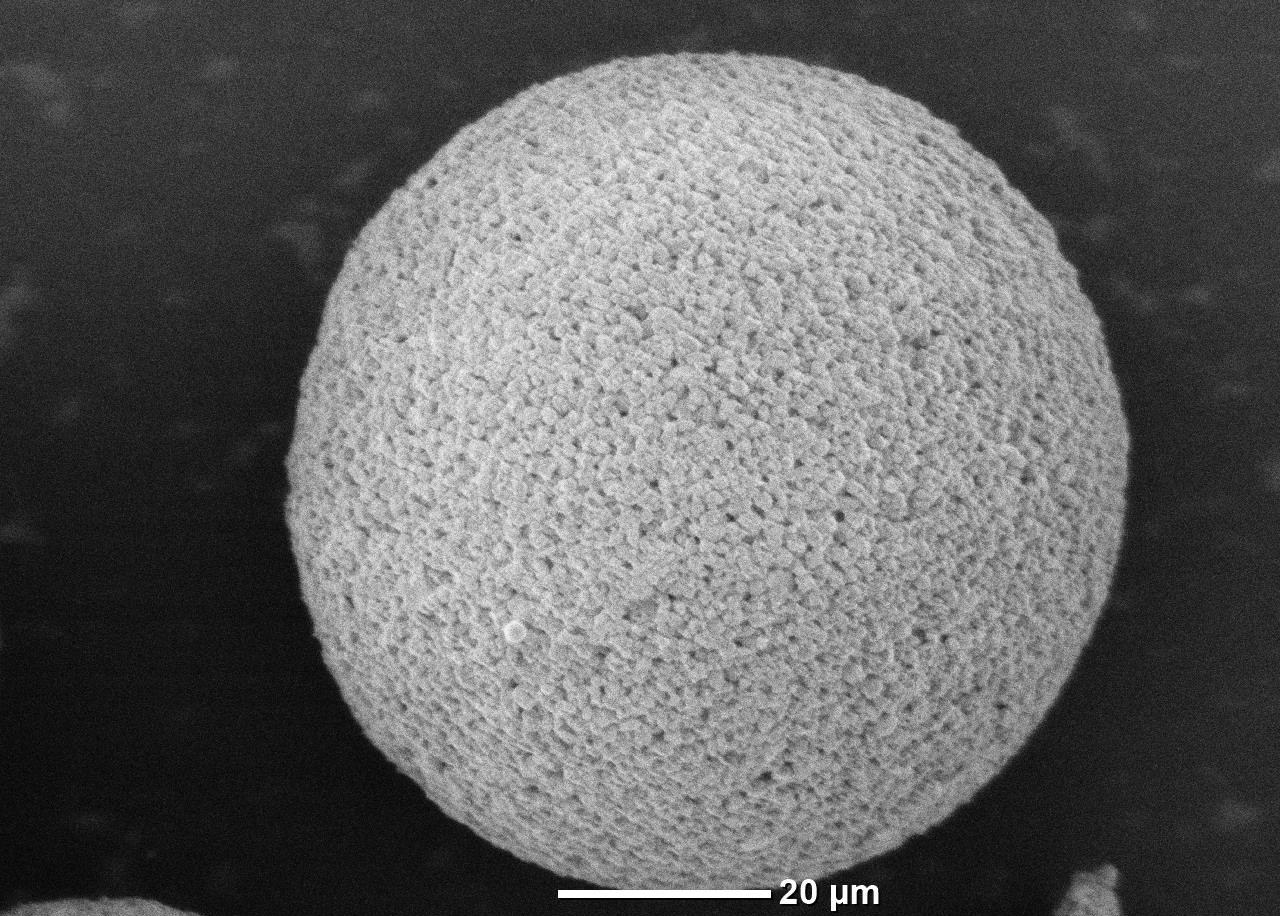
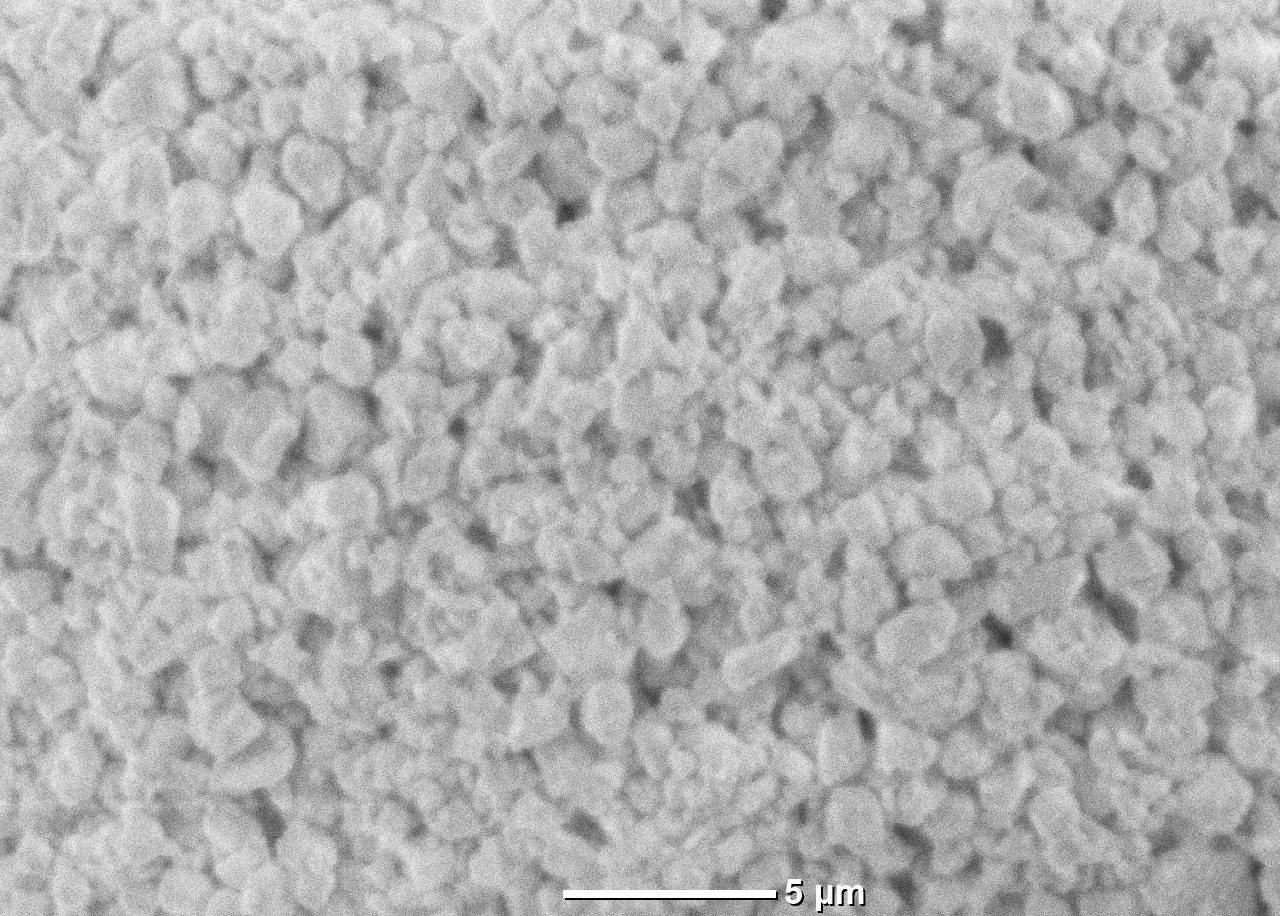
Hydroxyapatite from tuna bone was spray granulated at PTC ASEAN. The granules are spherical and well separated, mostly about 20–100 µm, with a porous surface built from primary crystals of around 1 µm.
The granules meet the same requirements as fine‑ceramic powders: controlled size, round shape and good flow for pressing, coating and forming. The same routes apply to salmon bone.
Scaling up
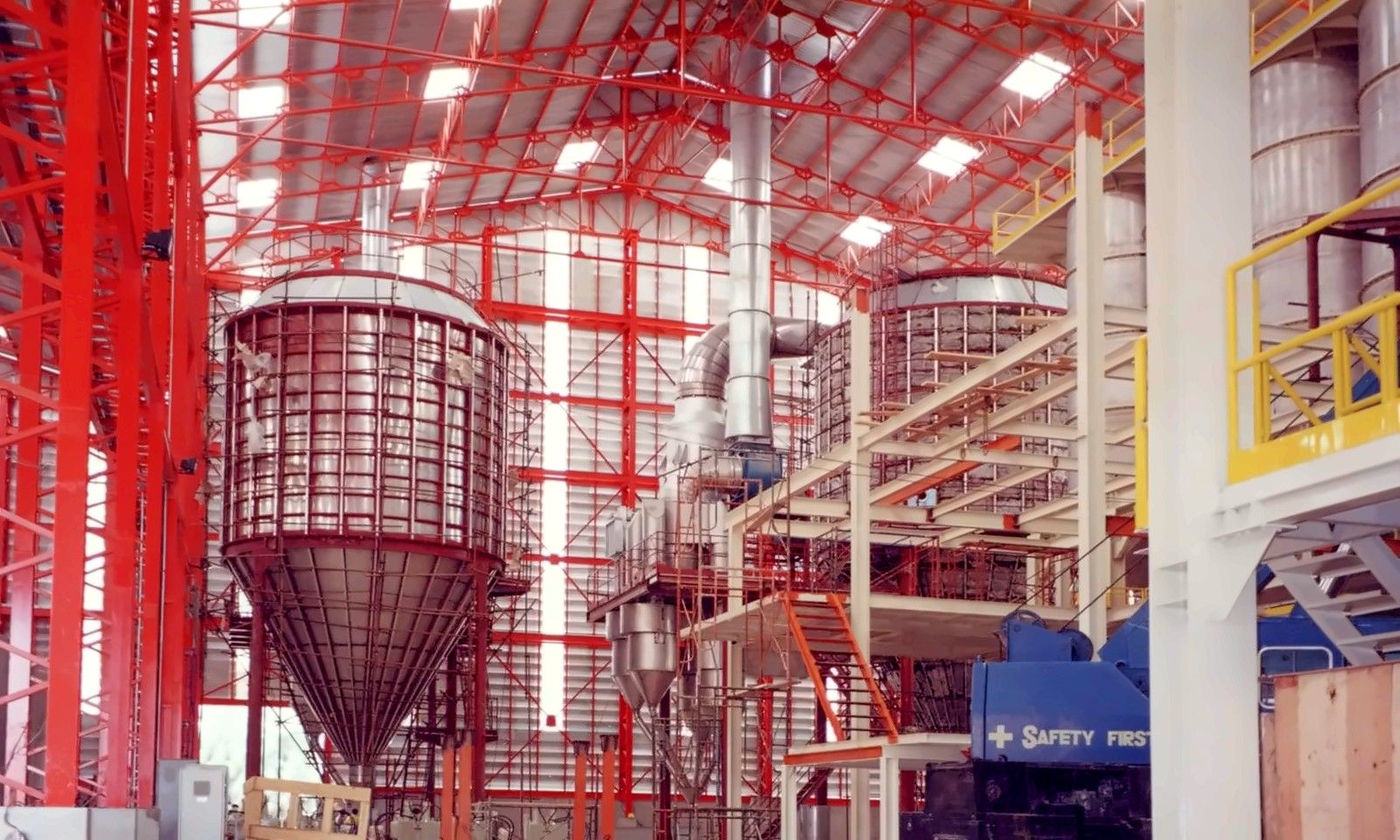
One preparation line feeds all three routes. A processor can start with bone calcium or bone powder, and add the higher routes later on the same line. PTC ASEAN sets the conditions at pilot scale, and T.S.K. Engineering builds the production line.
Applications
- Food and supplements: bone calcium and fine bone powder for calcium supplements and fortified foods.
- Nutraceuticals: calcium citrate and calcium lactate.
- Oral care and cosmetics: hydroxyapatite in toothpaste and personal care.
- Biomedical and dental: hydroxyapatite for bone‑graft and dental materials, after medical‑grade qualification.