The problem
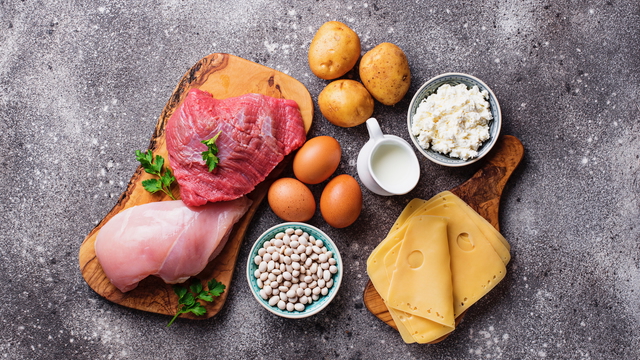
The existing cyclones after spray dryer 3 captured 96.9% of the powder, leaving emissions of about 500 mg/Nm³. The escaping caseinate was lost in a wet scrubber downstream: about 320 t per year, worth several million euros.
The solution
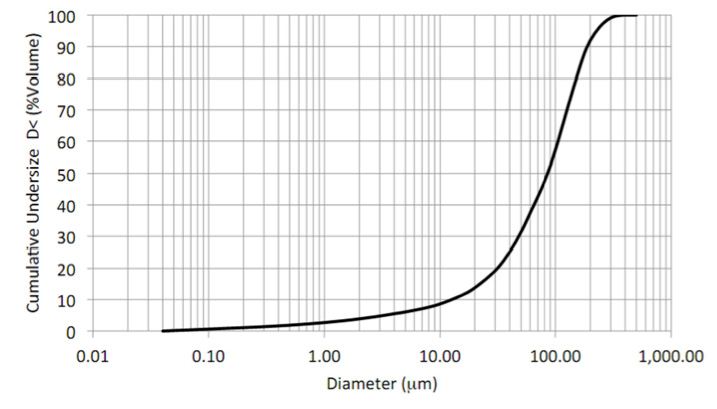
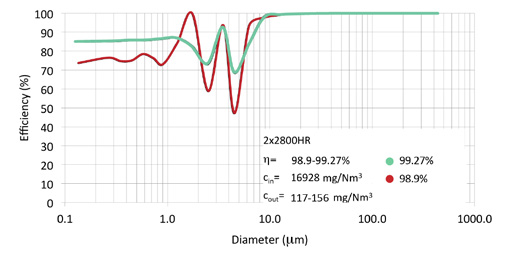
ACS took dust samples from the powder discharge and the gas outlet of the existing cyclones, measured the particle size distribution and reconstructed the solids load leaving the dryer. Its efficiency model predicted 98.9–99.27% collection with two numerically optimized Hurricane cyclones, at the same operating conditions and pressure drop.
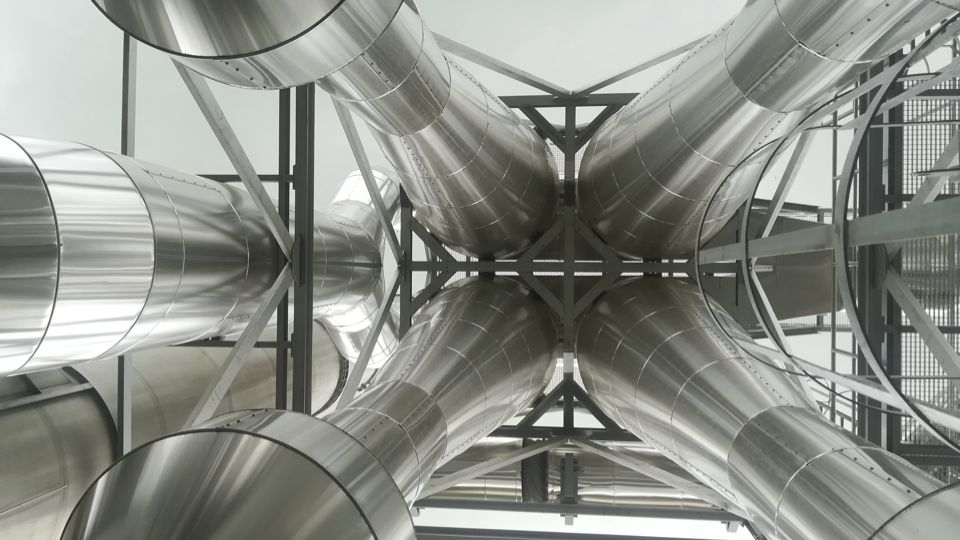
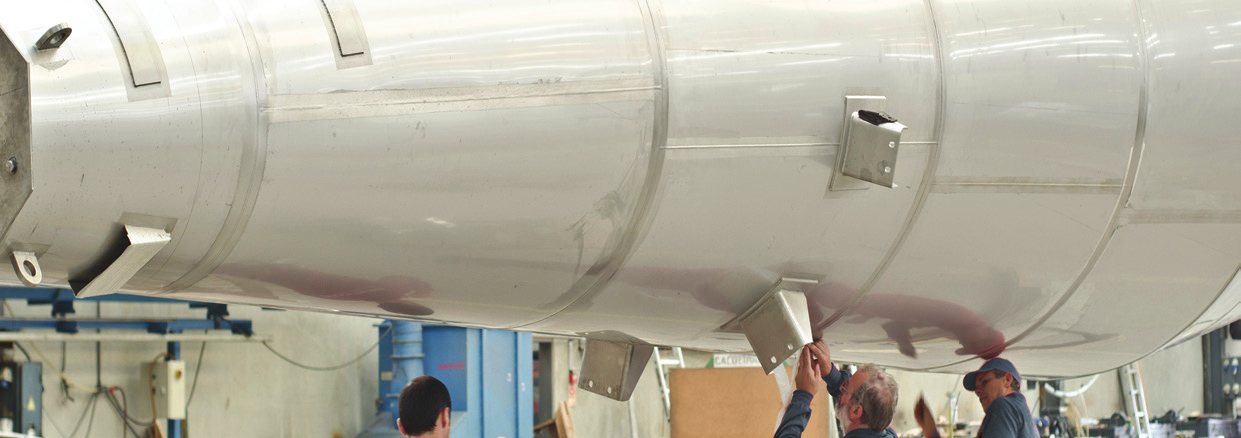
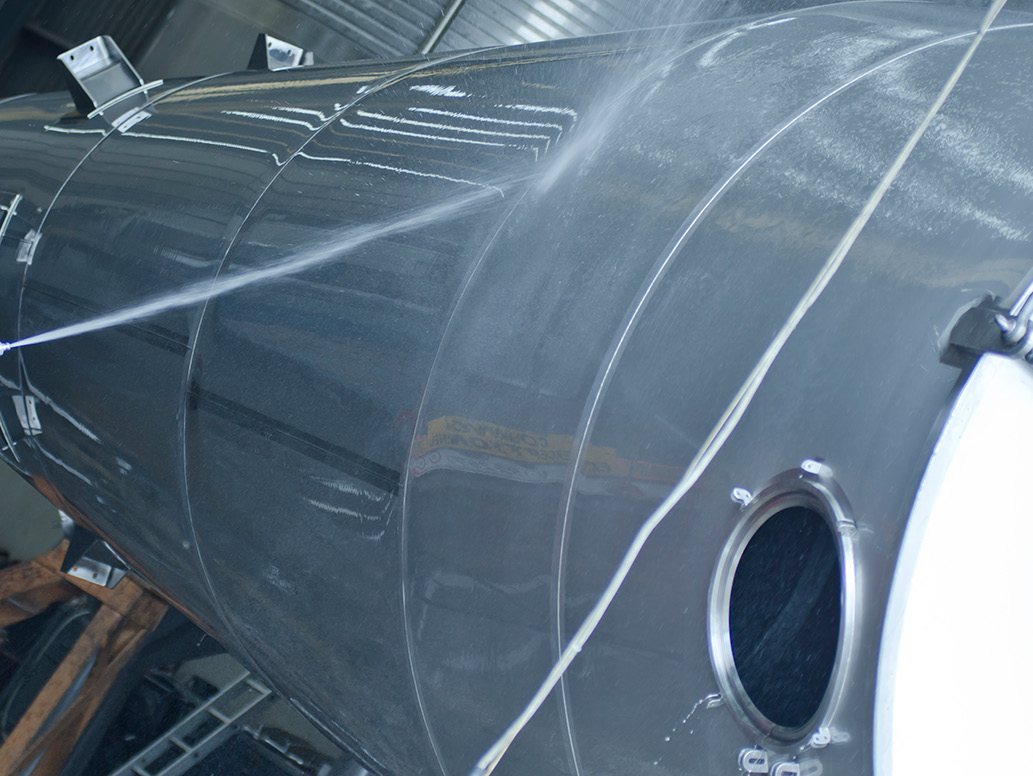
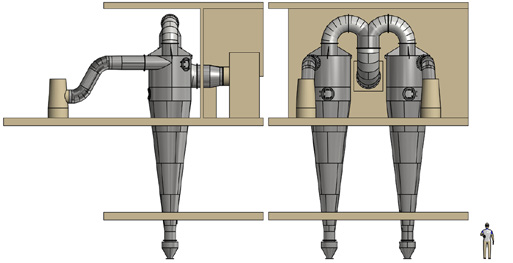
The system is two Hurricane cyclones ø2800 mm in parallel, each with a hopper, rotary valve air lock, inspection doors and CIP nozzles, built in stainless steel AISI 316L with food‑grade finish.
| Powder | Milk proteins |
|---|---|
| Actual flow rate | 92 140 m³/h |
| Temperature | 65 °C |
| Inlet concentration (dry) | 16 928 mg/Nm³ |
Result
Measurements confirmed an efficiency above 99.1% and a 70% cut in emissions, matching the prediction. Arla then ordered two more Hurricane cyclones (ø2100 mm, 57 878 m³/h) for another spray dryer at the same site.
| Existing cyclone efficiency | 96.9 % |
|---|---|
| Existing emissions | 500 mg/Nm³ |
| Predicted efficiency, Hurricane | 98.9–99.27 % |
| Verified efficiency | > 99.1 % |
| Emission reduction (verified) | 70 % |
| Investment / payback | €0.6 M / 6 months |
Source: Advanced Cyclone Systems (ACS) case study. Figures and photos: ACS.