The problem
Palm oil mills burn mesocarp fibre, palm kernel shell and empty fruit bunches in water tube boilers. Multicyclones after the boilers often exceed limits because of low efficiency and variable fuel. Malaysia’s Department of Environment set a limit of 150 mg/Nm³ at 12% CO₂ for all plants from 2019.
The solution
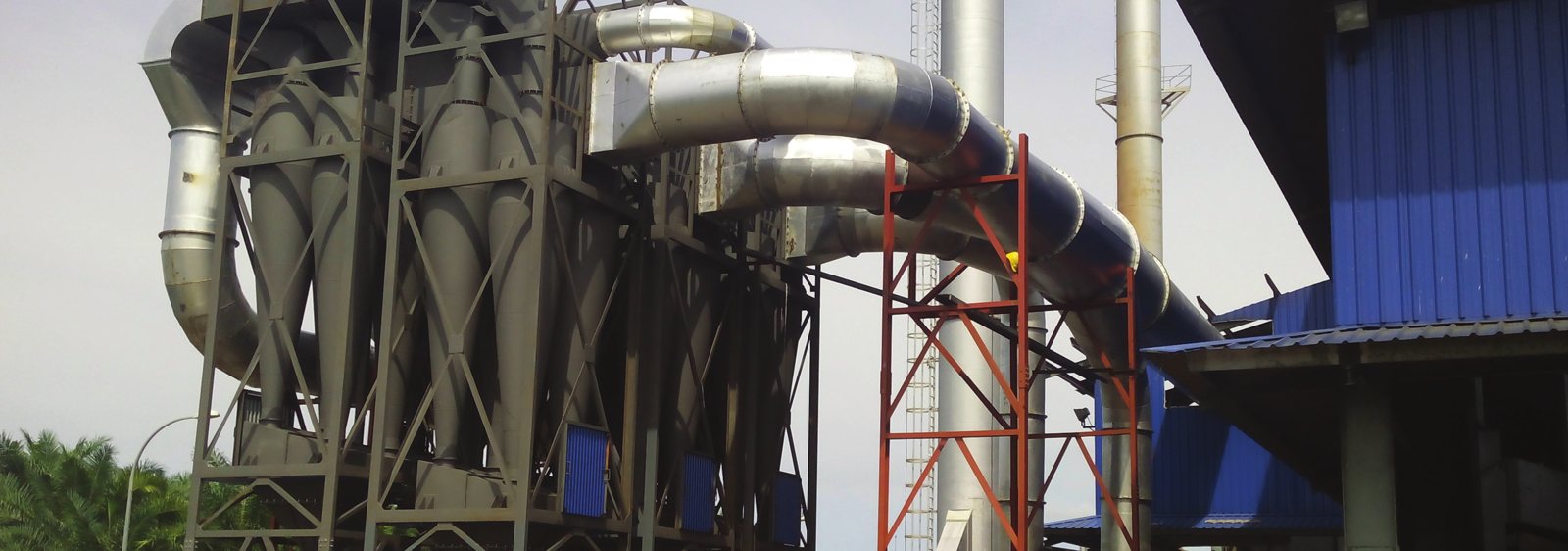
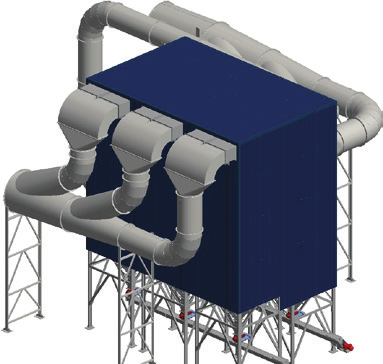
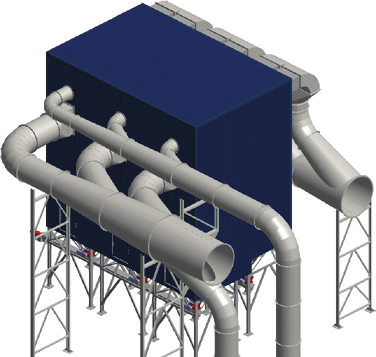
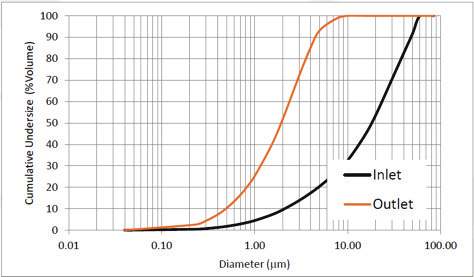
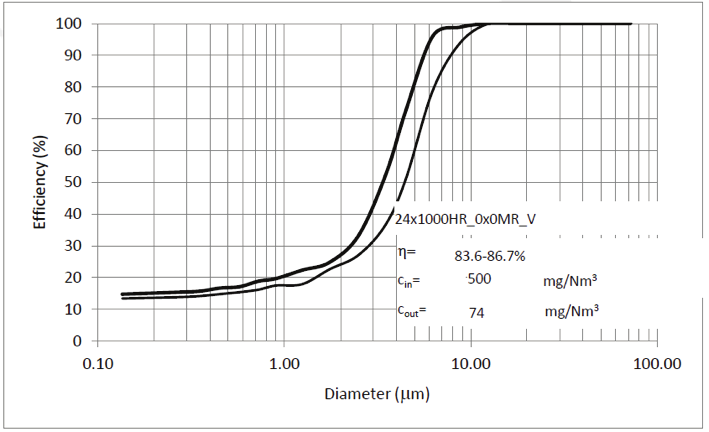
For the mill’s 35 t/h boiler (137 620 m³/h at 320 °C), ACS designed a mechanical ReCyclone system of 24 Hurricane HR ø1000 mm cyclones in six batteries of four, each with a V‑type mechanical recirculator. The recirculator returns uncaptured fines to the cyclone, cutting emissions by a further 40–60%, with no temperature limit and few moving parts.
| Fuel | Palm mesocarp fibre and palm kernel shell |
|---|---|
| Boiler | 35 t/h water tube |
| Actual flow rate | 137 620 m³/h (wet) |
| Temperature | 320 °C |
| Inlet concentration | 500 mg/Nm³ |
Result
Verified results confirm emissions under 100 mg/Nm³ at 12% CO₂ for inlet loads above 500 mg/Nm³. ACS was then asked to supply three more systems for other mills in Malaysia.
| Malaysian limit (from 2019) | 150 mg/Nm³ at 12 % CO₂ |
|---|---|
| Guaranteed emissions | < 150 mg/Nm³ |
| Expected emissions | < 100 mg/Nm³ |
| Expected pressure drop | < 1.25 kPa |
Source: Advanced Cyclone Systems (ACS) case study. Figures and photos: ACS.