

Typical requests
When customers come to us
Settling in transit
Slurries made in house settle or harden before they reach the dryer. Redispersion changes their properties.
Changing additives
Dispersants and binders change over time, and some materials react with water.
Small development batches
In‑house equipment cannot make several fixed‑quantity samples for development.
Contamination risk
Production mills cannot be used for development work without risk of foreign matter.
Capabilities
What we handle
Methods
Pot mill and ball mill at PTC ASEAN. Bead mill and larger ball mills at PRECI in Japan.
Media
Zirconia balls and beads for low wear contamination. Your own media can be used after review.
Batch size
From small development batches up to about 150 L at PRECI.
One contract
Slurry preparation, then spray drying or freeze granulation of the same batch.
Equipment
Mills and media
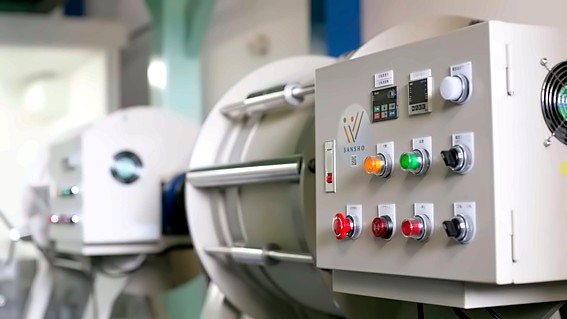
PTC ASEAN
Pot mill and ball mill
Zirconia balls, ⌀10 mm. For development batches and trial feeds.
Larger batches in Japan
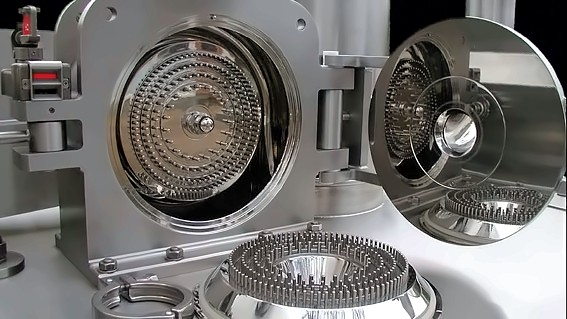
Bead mill with zirconia beads of ⌀0.5 or 1.0 mm, and 50 L and 100 L ball mills with nylon linings at PRECI's Powder Technical Centers.
Service content
Scope of supply
Provided by PTC ASEAN
- Pot mill, ball mill and zirconia media
- Spray drying or freeze granulation, when combined
- Containers and dispatch of the slurry, when no drying is ordered
- Equipment cleaning after each run
Provided by the customer
- Solid raw material
- Dispersion medium, or arranged by us after discussion
- Dispersants, binders and other additives, or arranged by us
- Material data, including the Safety Data Sheet (SDS)
Principle
Why the slurry decides the granule
In spray drying, granule properties depend more on the slurry than on the dryer settings.
Agglomerated slurry
Particles form a network held by van der Waals forces. Higher viscosity, solid spherical granules.
Dispersed slurry
Particles stay separated. Low viscosity, but granules can become hollow.
Hollow granules
Hard shells resist crushing, leaving voids after pressing. Fired density and strength drop.
Prepared for the use
A stable dispersed slurry suits most uses. Press‑formed ceramics often need agglomerated feed.
Know‑how
Dispersed or agglomerated, measured
PRECI trials on alumina slurries.
| Pot mill · alumina ⌀0.6 µm | Agglomerated | Dispersed |
|---|---|---|
| Dispersant | None | 0.15 wt% |
| Viscosity | 1,400 mPa·s | 15 mPa·s |
| Granules | Solid, spherical | Elliptical, hollow |
| Bead mill · alumina ⌀4.0 µm | Agglomerated | Dispersed |
|---|---|---|
| Viscosity | 283.5 mPa·s | 12.7 mPa·s |
| D50 after 120 min | 4.3 µm | 0.9 µm |
| Granules | Uniform solid spheres | Hollow spheres |
Applications
Materials we prepare
Case studies
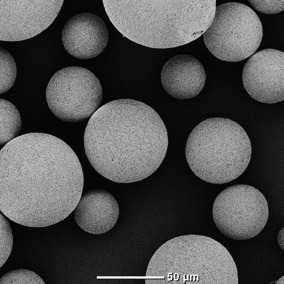
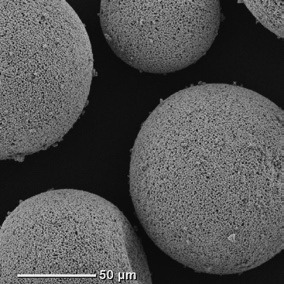
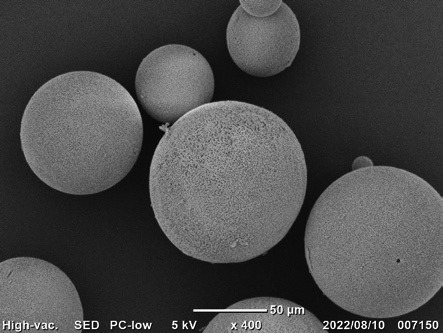
Slurries in practice
Case studies from PRECI's Powder Technical Centers in Japan.
Step by step
How to request a trial
Contact
Reach us through the contact form, by email or by phone.
Consultation
We discuss your material and goals. You complete the confirmation sheet.
Proposal
We propose the process for your material and send a quotation.
Scheduling
The run date is fixed when you place the order.
Material delivery
Send your material by the day before the run. Hand delivery is also possible.
Processing
We run your material on the scheduled day.
FAQ
Before you request a trial
Can you prepare slurries in organic solvents?
Yes, within limits on solvent type and quantity.
Can I use my own media?
Yes, if you supply the balls or beads and they suit our equipment.
Can I order the slurry only?
Yes. We ship the slurry without drying it.
Can I attend the run?
Yes.
Explore
Related pages
Discuss your material
Send us your material and target. We reply within one working day.